










UK Property Market October 2026: The Price of Commitment
Welcome to Garrington’s October UK Property Market Review. As the autumn market gets into its stride, buyers are weighing...
After weeks of speculation over wealth, property and investment taxation, the Autumn Budget has finally replaced rumour with clarity.
For homeowners, investors and those contemplating a move, the implications vary considerably by price point, ownership structure and location. Garrington’s analysis suggests this is not a Budget that resets the entire property market. Instead, it alters the calculation for particular groups, creating both new pressures and pockets of opportunity.
For owners and buyers of higher-value homes, one of the most significant outcomes is what the Chancellor did not do.
The High Value Council Tax Surcharge will still apply in England from April 2028 to homes valued at £2 million or more, but the threshold has not been lowered to the £1.5 million level discussed extensively before the Budget.
That distinction matters. In London and parts of the South East, a valuation above £1.5 million can encompass family homes whose owners may be asset-rich but have far less flexibility in their disposable income. Keeping the threshold at £2 million limits the number of households drawn into the new annual charge.
For owners already above it, the surcharge may still influence longer-term decisions about retaining, downsizing or relocating. Equally, buyers may begin to price future ownership costs more consciously into negotiations.
The backdrop is already highly fragmented. London prices were 2.2% lower year-on-year in August, according to the ONS, while the North East recorded annual growth of 3.2%.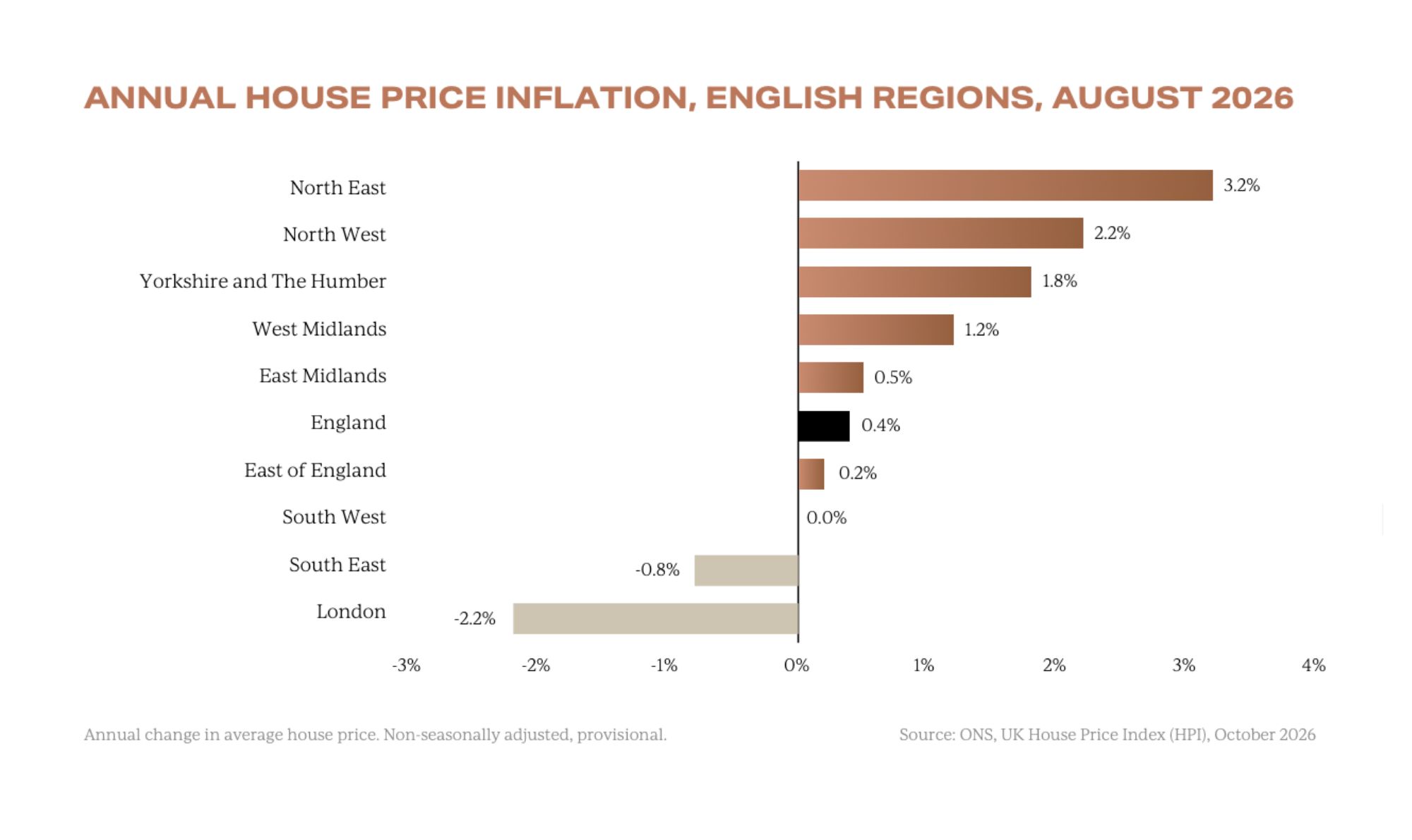 Northern Ireland was considerably stronger, with prices 9.2% higher annually in Q2, although its figures are reported quarterly.
Yet weaker average London pricing does not mean demand has disappeared at the top. Industry data show 89 transactions above £10 million in London so far this year, worth £2.21 billion.
Prime markets rarely move as one. Where sentiment is softer but the underlying property remains exceptional, well-capitalised buyers may find greater room to negotiate than headline transaction figures suggest.
For residential investors, the direction is less accommodating.
From April 2027, tax rates on property income will rise to 24%, 44% and 49% for basic, higher and additional-rate taxpayers in England, Wales and Northern Ireland. This comes on top of an already demanding tax and regulatory environment for private landlords.
The practical consequence is that gross yield becomes an increasingly poor measure of investment quality. Finance costs, taxation, maintenance and regulation all need to be considered before judging whether an asset still earns its place in a portfolio.
Could the latest increase encourage more landlords to sell?
For some, particularly those with higher borrowing costs or compressed yields, it may tip the calculation towards disposal.
That creates a different opportunity for buyers with stronger balance sheets. If more stock reaches the market, particularly in locations where rental demand remains robust, acquisition opportunities may improve. The emphasis, however, needs to be on net return, capital resilience and the quality of the underlying asset rather than income alone.
The absence of wider Stamp Duty reform is also notable. Transaction costs remain a material consideration at the upper end of the market, where many moves are discretionary. Supporting activity at the bottom of the ladder is useful, but liquidity also depends on established owners feeling able and willing to move.
First-time buyers receive the most direct assistance.
The £4.7 billion Your First Home scheme will launch from April 2027, offering eligible purchasers a government equity loan of up to 20% and allowing purchases with deposits as low as 2.5%. Income and property-price caps will apply, with higher limits in London.
The equity loan will be interest-free for the first five years before charges begin, while repayment remains linked to the property’s value. This can materially reduce the upfront barrier to ownership, but it does not remove the need to assess affordability over the longer term.
A new First Time Buyer ISA will follow in 2029, adding further support for deposit saving through a government bonus.
Together, the measures should improve access for some households. However, assistance with funding should not be confused with value.
Your First Home applies to new-build property, where purchasers still need to consider pricing, service charges, location, resale demand and the eventual cost of the equity loan. For developers, stronger demand may help absorb existing stock and provide greater confidence to progress future phases.
Supply remains the harder part of the housing equation.
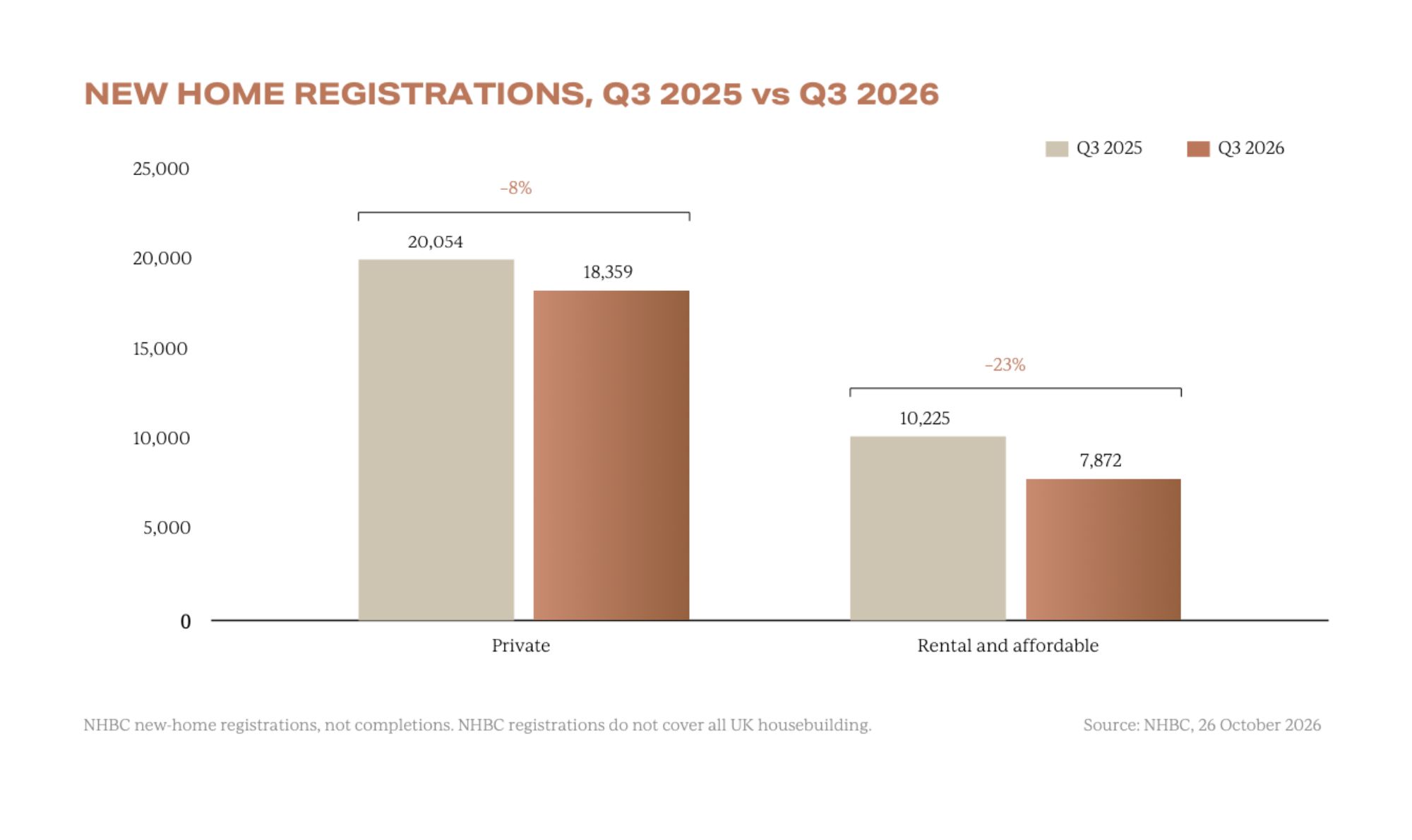
NHBC recorded 26,231 new-home registrations in Q3 2026, 13% fewer than a year earlier. Private registrations were down 8%, while rental and affordable registrations fell by 23%.
Against that backdrop, the Budget includes further support for social and affordable housing, cheaper council borrowing and measures intended to reduce costs on some brownfield schemes.
These interventions are constructive, but development viability rarely turns on one policy alone. Planning, finance, construction costs and buyer demand remain tightly connected, and weakness in any one can hold back delivery.
The broader question is whether the Budget does enough to improve movement through the existing market. First-time buyer support may help at the entry point, but there is little here to encourage downsizing or discretionary moves further up the chain.
That matters because housing supply is not only about building more homes. It is also about making better use of the homes that already exist.
The Autumn Budget therefore leaves a market of contrasts.
It increases the tax burden on some investors and confirms additional costs for owners of the most valuable homes, but it stops short of the broader property-tax expansion many feared. At the same time, it directs meaningful support towards first-time buyers and selected areas of housing delivery.
For buyers, that divergence can create opportunity.
Prime London remains price-sensitive but active at its highest levels. Regional performance varies considerably, and additional stock may come forward as individual owners and investors reassess their position.
The Budget is unlikely to provide a single catalyst for UK property, but nor does it need to. In a fragmented market, the strongest opportunities are usually property-specific, where quality, realistic pricing and seller motivation intersect.
If you are considering a move or acquisition following the Autumn Budget, Garrington can help identify where the policy changes genuinely alter the equation, and where local knowledge, careful analysis and skilled negotiation remain far more important than the headline.
Please get in touch.
Welcome to Garrington’s October UK Property Market Review. As the autumn market gets into its stride, buyers are weighing...
Welcome to Garrington’s September UK Property Market Review. Following the usual seasonal lull in August, summer...
Welcome to Garrington’s August UK property Market Review. The summer holidays usually draw attention away from house hunting,...