










Where the UK Property Market Divides This Autumn
Welcome to Garrington’s September UK Property Market Review. Following the usual seasonal lull in August, summer...
Welcome to Garrington’s October UK Property Market Review.
As the autumn market gets into its stride, buyers are weighing a wider choice of homes against rising borrowing costs and the prospect of another consequential Budget.
Garrington continues to see healthy demand, but buyers are reassessing what they can afford and what they are prepared to pay; for some that is dictated by financing, for others it reflects a more cautious judgement about value.
September’s price data captures that tension. Rightmove recorded a 0.7% rise in new asking prices as sellers returned after the summer, while Nationwide reported a 0.2% monthly fall and annual growth slowing to 0.8%.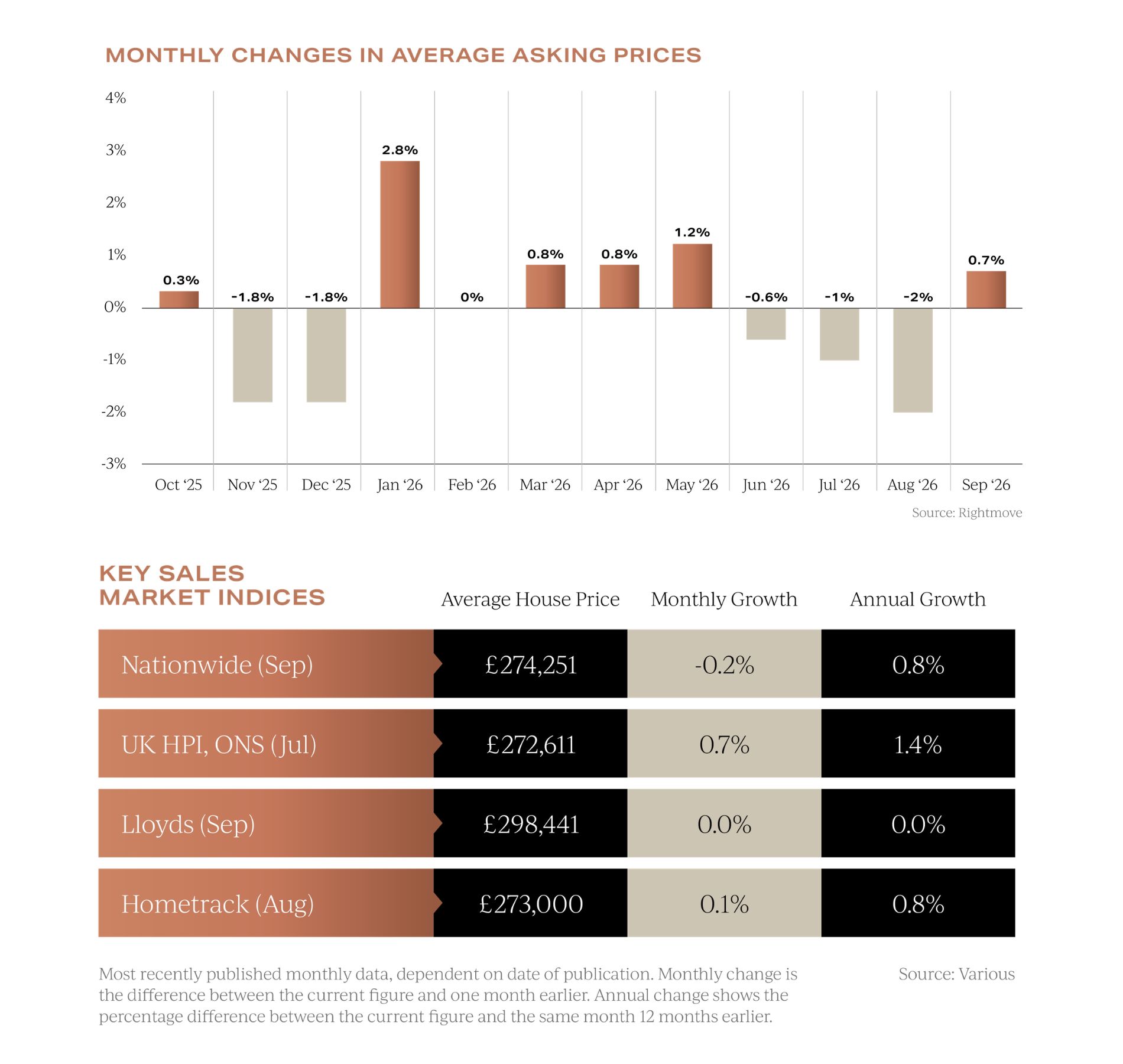 One measures what sellers are asking and the other what buyers are being approved to pay, and read together they suggest that sellers’ seasonal optimism is meeting limited underlying price momentum.
Buyers and sellers are viewing the market from opposite directions. Buyers are looking through the windscreen at the costs and uncertainties ahead, while many sellers remain focused on the rear-view mirror, anchoring their expectations to valuations or neighbouring sales agreed in a very different market.
That gap is why healthy demand does not readily translate into transactions: yesterday’s evidence and tomorrow’s risks are producing two different interpretations of today’s value.
Zoopla’s September report brings the shift into sharper focus. The stock of homes for sale was 5% higher than a year earlier, yet sales agreed were 9% lower in the four weeks to 20th September, so homes are accumulating as well as arriving, strengthening the buyer’s hand and adding pressure to sellers’ expectations.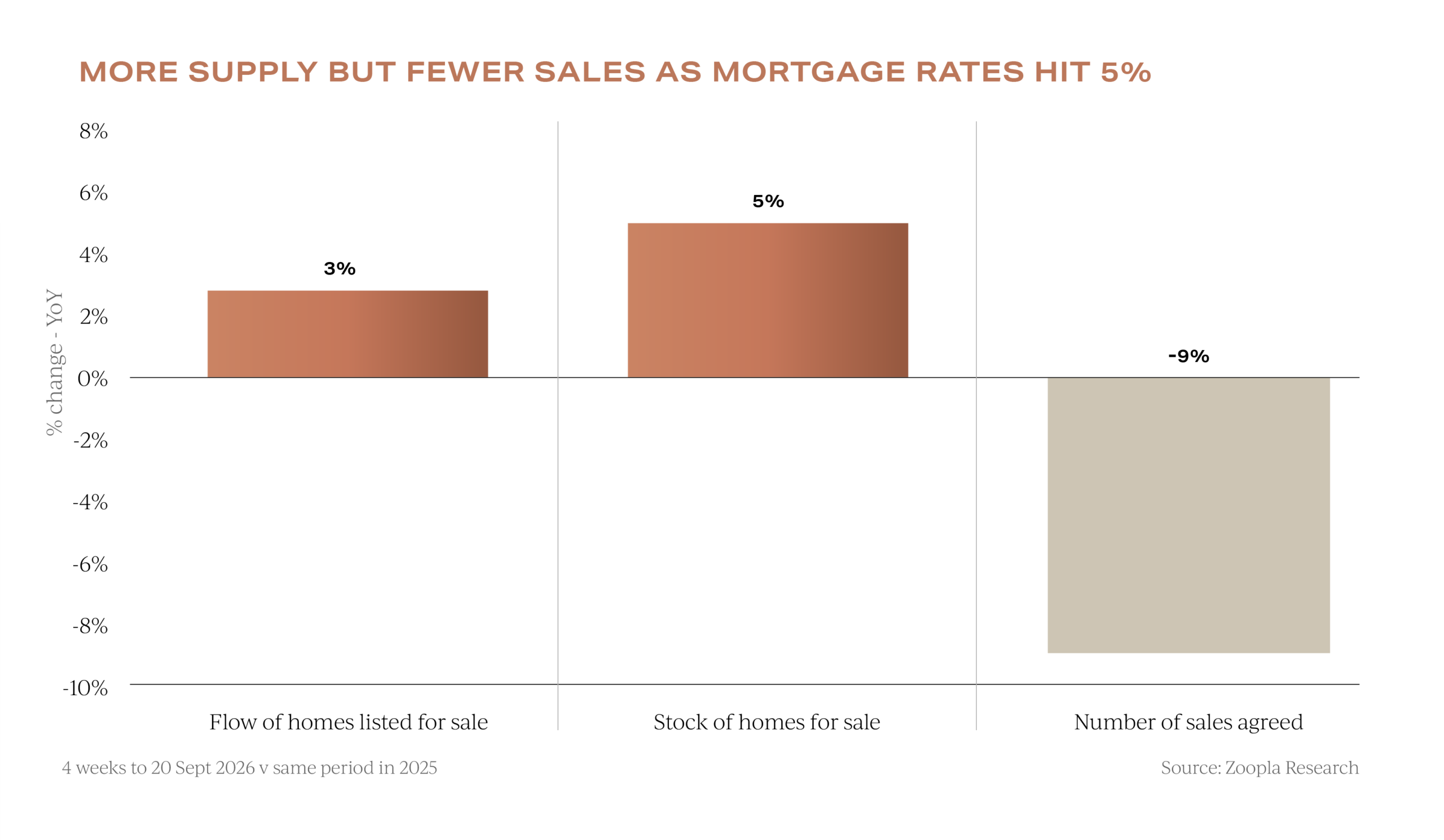 The regional contrast in how quickly homes find a buyer is striking. Of properties listed between April and June, around 30% in London secured a buyer within three months, compared with roughly three-quarters in Scotland.
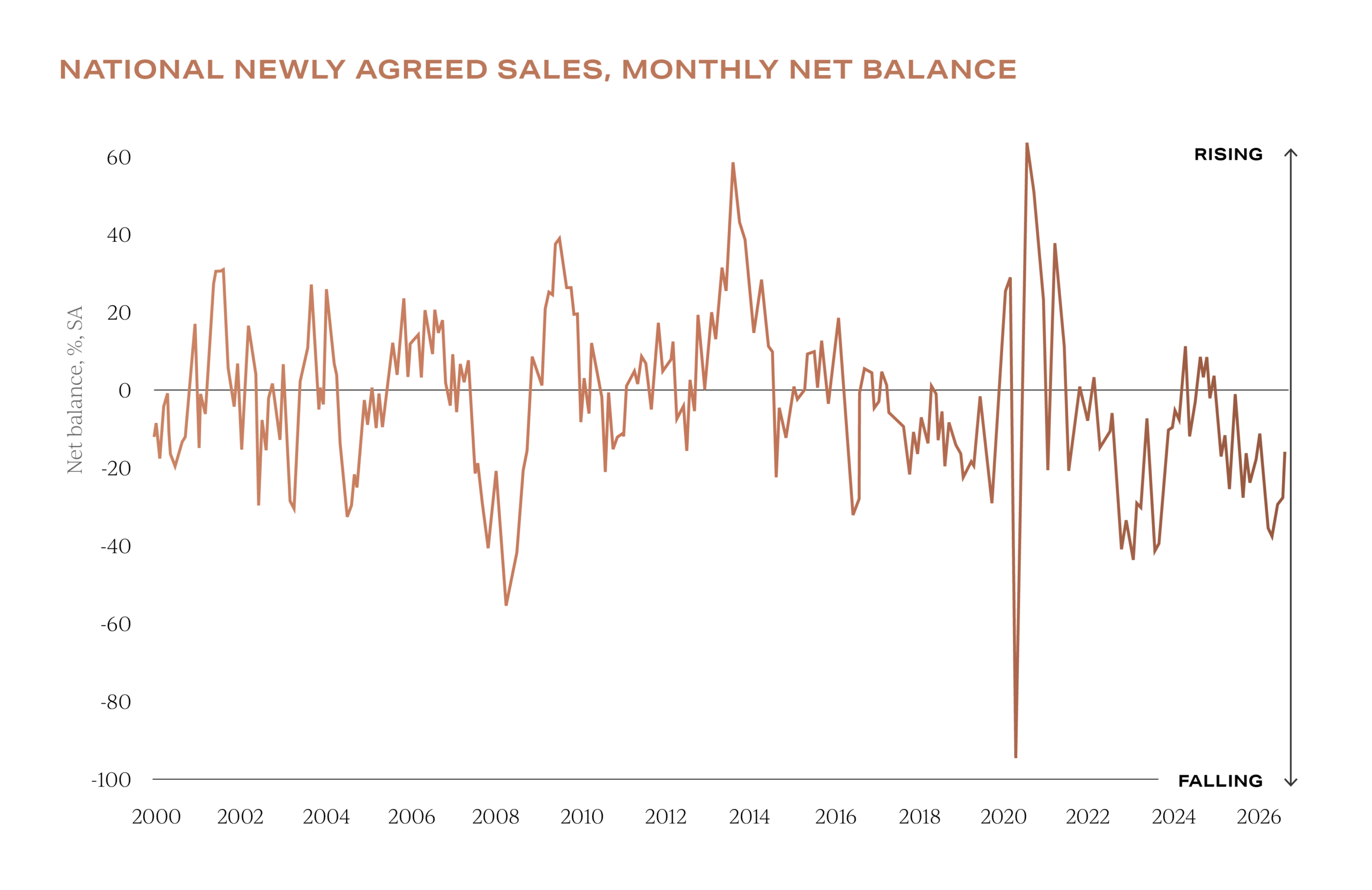
Scotland’s ‘offers-over’ system helps explain the difference, but the figures show how little a national average reveals about an individual market.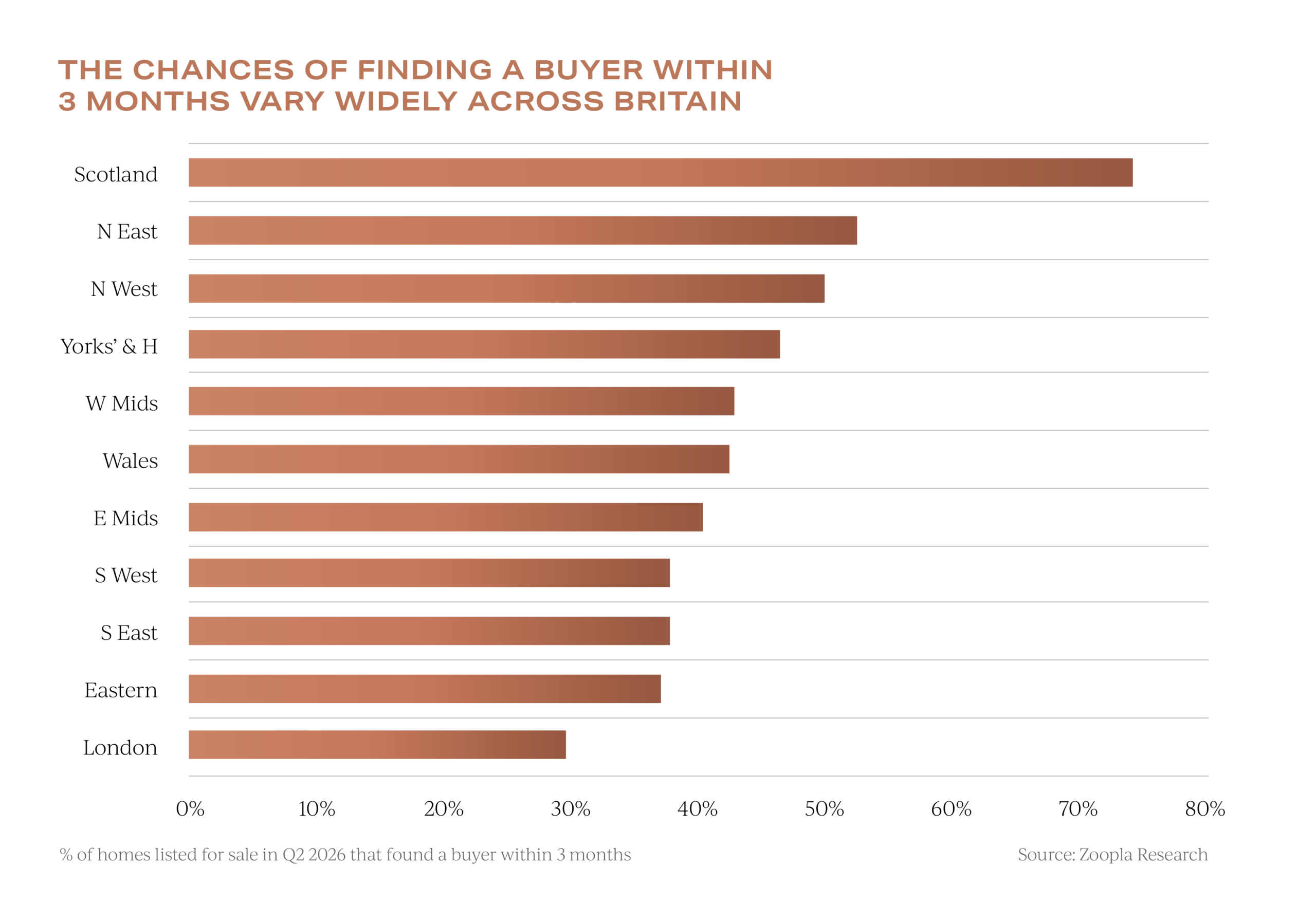 Not every indicator is weakening, though. The RICS agreed-sales net balance for England and Wales improved from minus 38 in April to minus 17 in August, although more surveyors were still reporting falls than rises.
Industry data for prime central London records a 0.3% rise in prices over the three months to September, the first quarterly increase in four years, with values still 2% lower annually. In Garrington’s read, some buyers are finding value after a prolonged adjustment, which is not the same as a wider recovery.
Financing is where the squeeze is most visible. In early October, Moneyfacts’ average five-year fixed mortgage rate reached 6%, its highest since September 2023, and fixed deals below 5% had fallen from nearly 1,500 at the start of September to just nine, excluding Northern Ireland-only products.
Fixed mortgage rates follow wholesale funding costs and interest rate expectations, rather than Bank Rate,
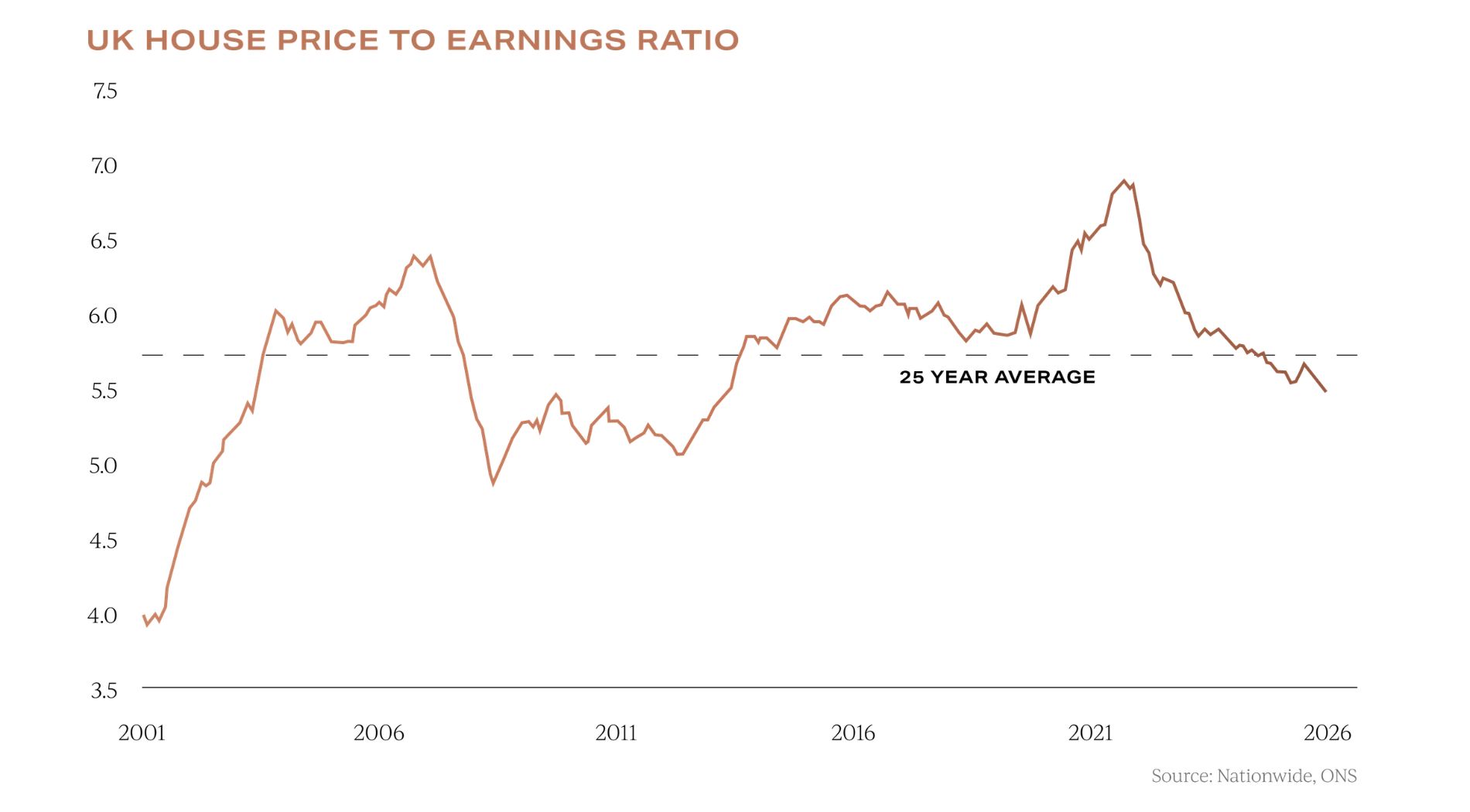
The Bank of England held this at 3.75% in September, so buyers’ budgets can tighten even when the base rate is unchanged. Nationwide nevertheless identifies a more encouraging underlying development, with earnings outpacing house price growth and gradually improving affordability.
In our view, this helps explain why genuine demand coexists with hesitation: the longer-term relationship between incomes and prices is improving, while the immediate financing decision has become more demanding.
 October’s policy crossroads
The Budget on 28th October adds another consideration, following press reports that ministers are considering lowering the so-called mansion tax threshold to £1.5 million.
At the time of writing, that remains speculation; the previously confirmed annual surcharge applies to homes in England worth £2 million or more from April 2028. A wider scope could affect what buyers are prepared to pay, so clarity matters for negotiations already sensitive to cost.
At the other end of the UK property market, the government has proposed the ‘Your First Home’ equity-loan scheme.
This would support eligible first-time buyers purchasing new-build homes in England, and further details are due in the Budget.
Additional sales could encourage construction and the associated trades, although a scheme confined to new homes will not automatically release resale chains; its wider benefit depends on generating fresh activity rather than redirecting existing demand.
The government has also set out proposals for agent licensing and independent regulation, a route to stronger professional standards once legislation follows.
Together, these measures matter beyond house prices: completed moves support employment mobility and spending across the businesses involved in moving, furnishing and improving homes. The economic prize is a market in which households can transact with confidence, rather than simply one in which values rise.
Most of the clients Garrington is assisting ‘need to move’, rather than merely ‘want to move home’, with family changes, employment and relocation underpinning their plans.
Discretionary buyers are more inclined to pause, but their hesitancy is not representative of the whole market. International demand also remains reasonable, although price sensitivity runs through every bracket.
We are also seeing unusually high levels of off-market activity for this stage of autumn; some owners are reluctant to launch home sales publicly but will still consider a serious buyer at the right price.
Sellers who recognise the costs and risks buyers are pricing in today will be best placed to turn interest into a sale. For buyers, the opportunity lies in securing a home on terms that make sense for the years ahead, while recognising that scarce, well-priced homes may still attract competition.
For those moving up the ladder, a softer UK property market can also narrow the gap between their sale and onward purchase. If you are considering a move this autumn, our team would be pleased to help. Please get in touch.
Welcome to Garrington’s September UK Property Market Review. Following the usual seasonal lull in August, summer...
Welcome to Garrington’s August UK property Market Review. The summer holidays usually draw attention away from house hunting,...
Welcome to Garrington’s July UK Property Market Review. Summer is now in full swing, bringing Wimbledon, the cricket, a...