

Best places to live in Surrey: A buying agent’s guide
The best places to live in Surrey each give a buyer something specific: a fast train into Waterloo, a...
As buying agents who regularly search for riverside homes across the Thames Valley and into London, we are frequently asked which towns on the Thames suit different lifestyles, commuting patterns, and longer-term plans.
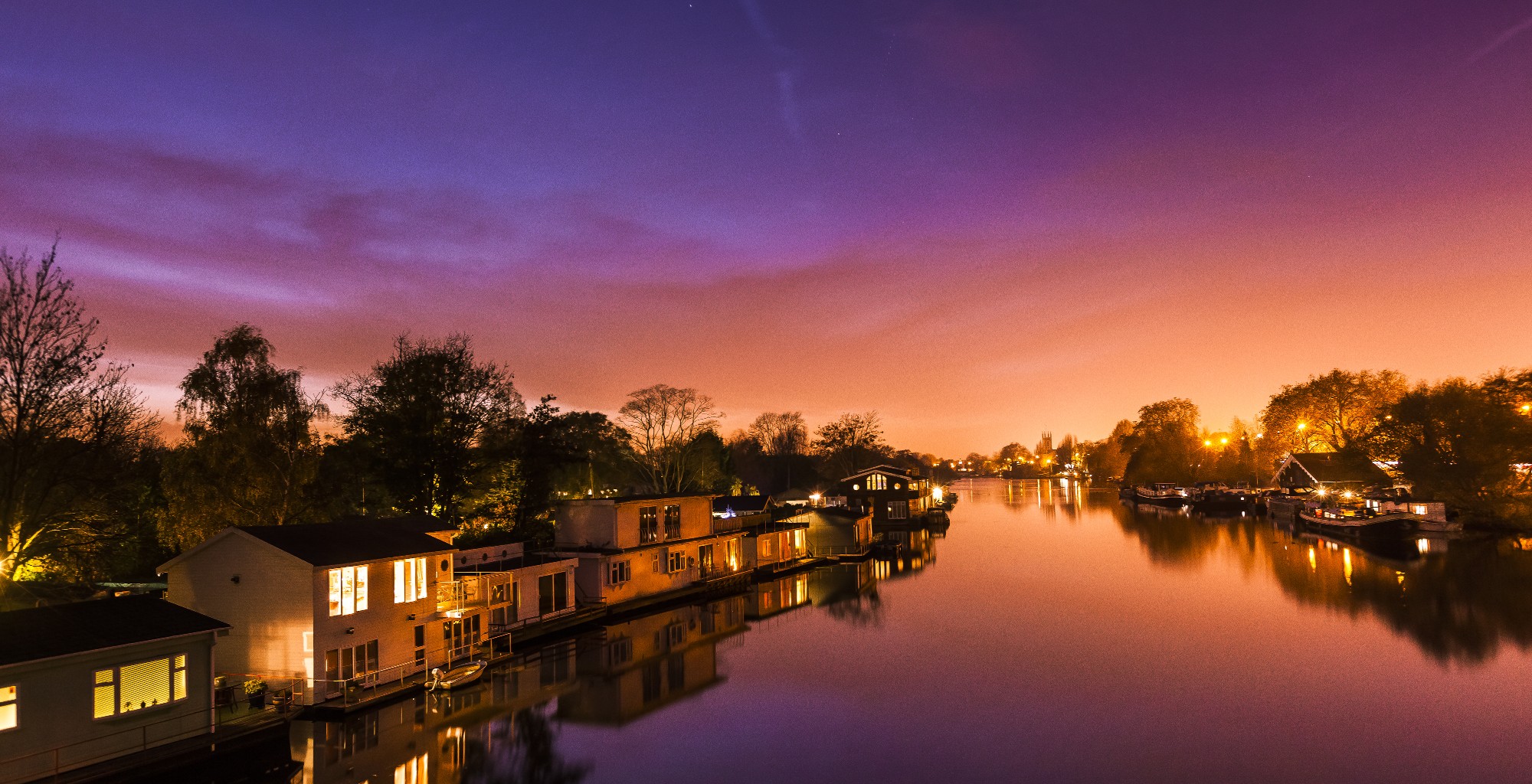
Living by the Thames has shaped some of the most established residential addresses in England, though the river is not one market. The right starting point depends on where along it you look.
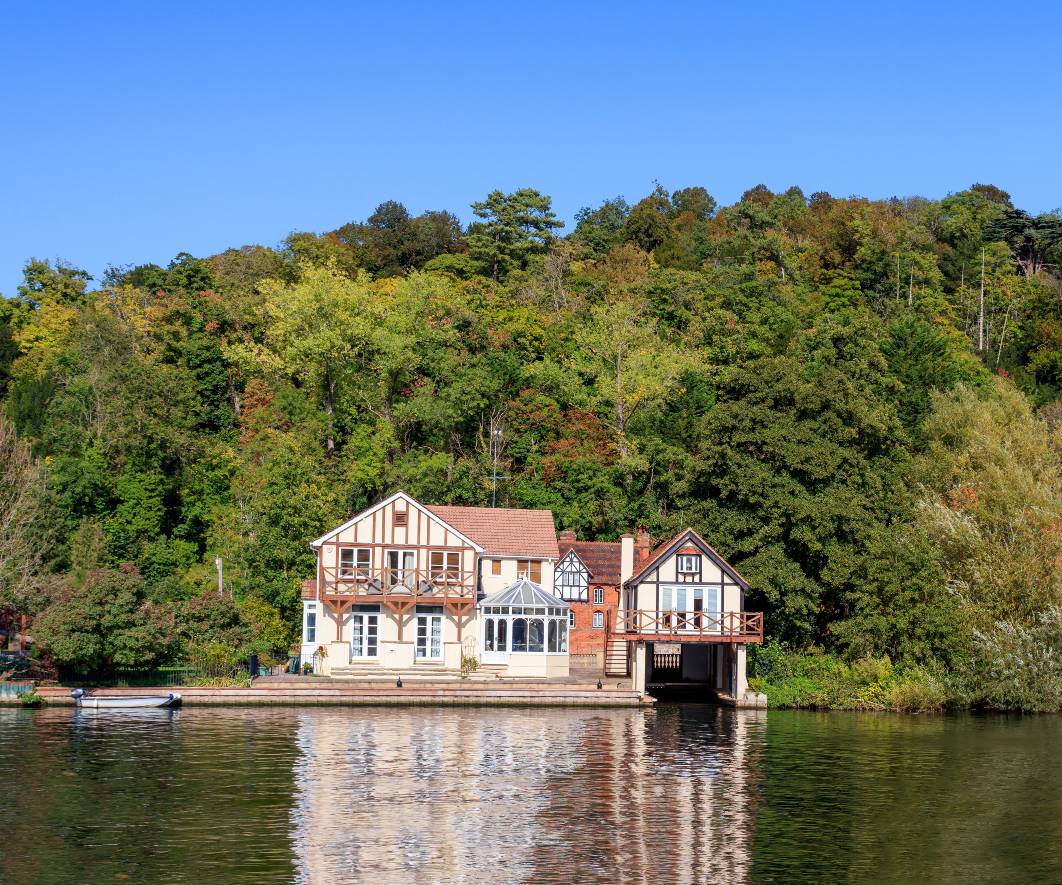
The River Thames passes through some of the most established residential postcodes in the country. Part of the appeal is straightforward: water-facing aspects, mature walking and cycling routes, and the kind of settled infrastructure that older waterside places tend to share.
Beyond the view, several structural factors quietly shape value along the Thames.
The middle reach of the river runs alongside the Chilterns National Landscape, and Conservation Areas, Areas of Special Character, and Thames Policy Areas govern certain stretches in Greater London. These designations limit the pace and form of development, which can help preserve the character many buyers value.
The other quiet factor is access. Direct river frontage, mooring rights, and proximity to towpaths and locks all behave differently from standard amenity gardens, and they reward careful enquiry before any offer.
What follows is not a comprehensive list. The towns on the Thames included here are a selection chosen to represent some of the principal residential zones along the river.
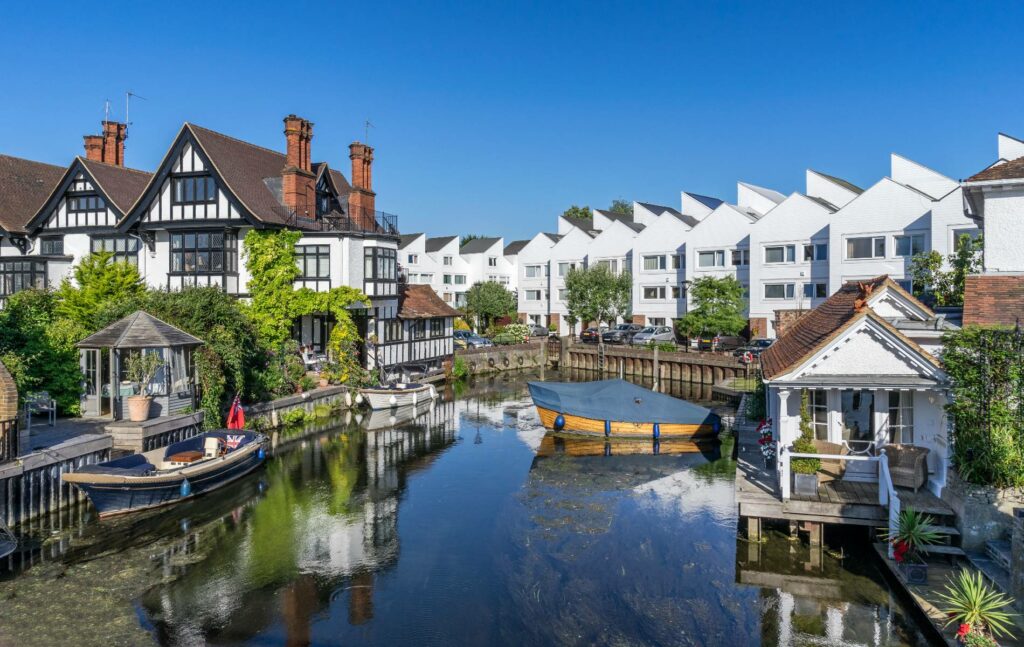
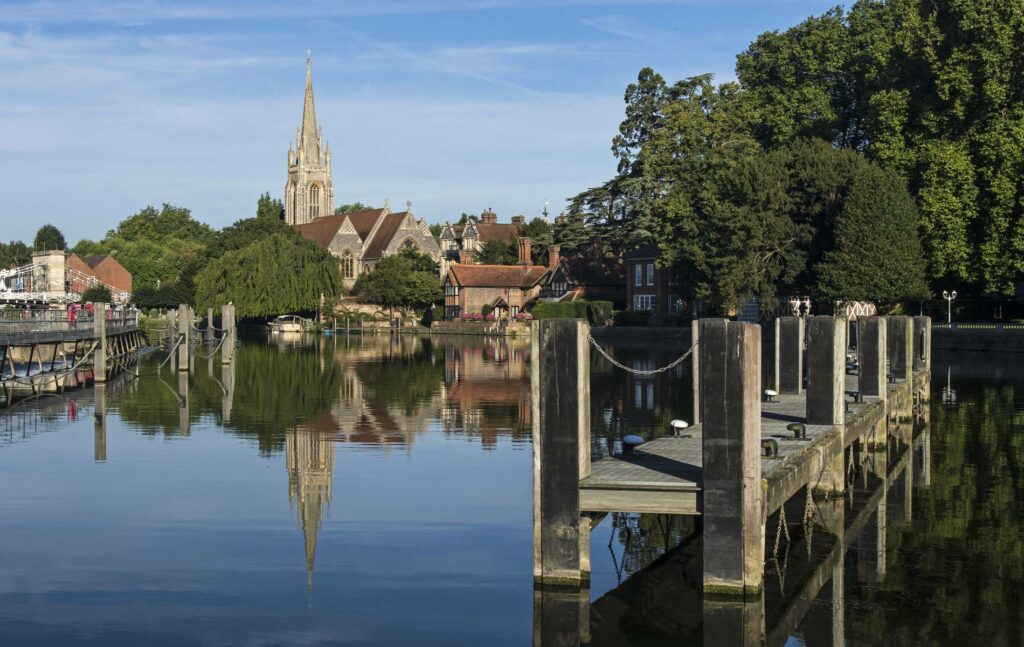
Marlow sits on the Buckinghamshire bank just upstream of Maidenhead, with the Thames running along the southern edge of the town. The bridge, the church spire, and Higginson Park form the visual centre of daily life, and the High Street’s mix of independent shops, cafés, and restaurants is short enough to be walkable in full.
The town pairs an active rowing and watersports culture with depth in food, including The Hand & Flowers and The Coach. Schools draw families to the area, with Sir William Borlase’s Grammar School often cited.
Property in Marlow ranges from period homes in the streets close to the centre to substantial detached houses along Mill Road and Quarry Wood Road. Rail services run from Marlow to Maidenhead with onward connections to the Elizabeth Line.
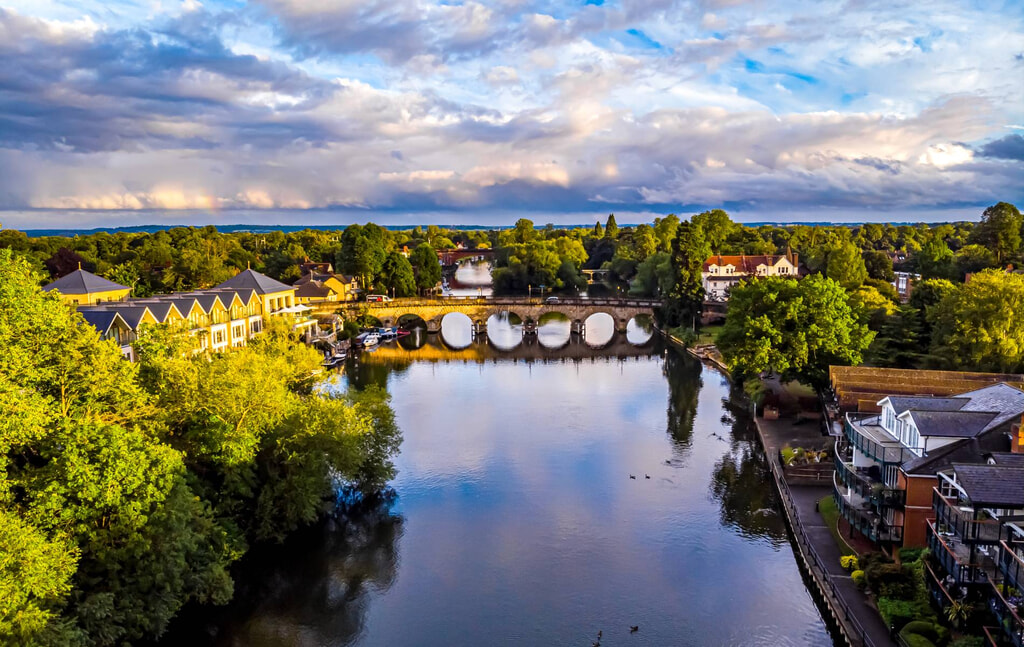
A few miles south of Marlow, Maidenhead occupies the south-western bank of the Thames in Berkshire and has been reshaped by the arrival of the Elizabeth Line. The fastest direct Elizabeth line services from Maidenhead can reach Bond Street in around 40 minutes, which has shifted how many buyers compare the town against alternatives further inside the M25.
Maidenhead is characterised by detached family houses set back behind generous gardens, several within walking distance of the station, and a good amount of green space across the town. The villages of Bray and Taplow are immediately adjacent and tend to attract buyers wanting a quieter setting without losing the commute.
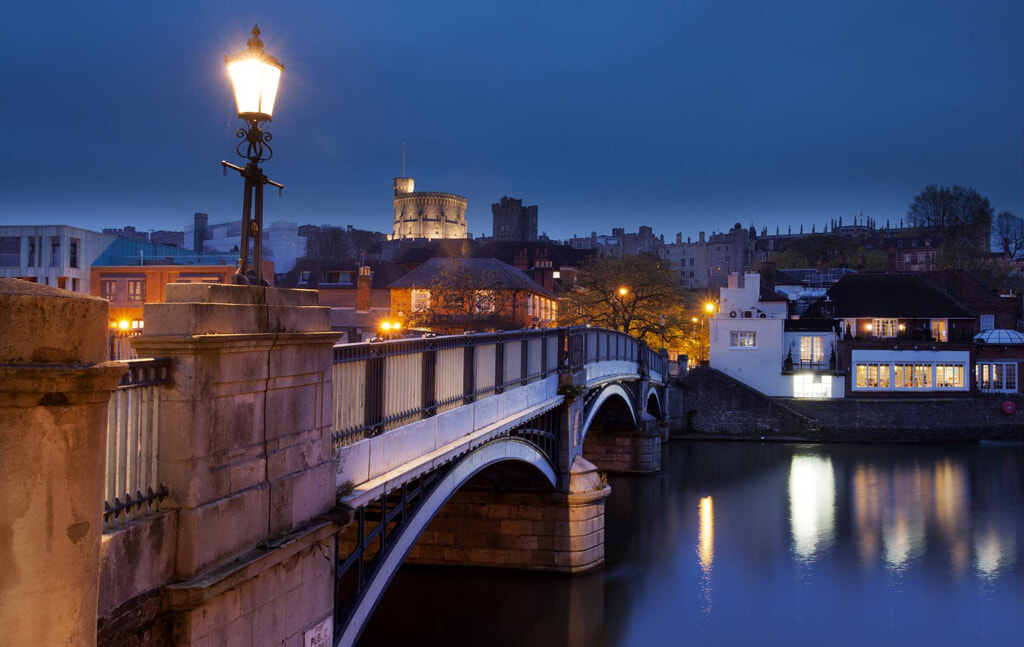
Windsor and Eton are towns on the Thames that face one another across the river in Berkshire and function more as a single market than as two.
On the Windsor side, demand concentrates around homes overlooking Windsor Great Park and The Long Walk, which extends from the Copper Horse statue to the Castle. St Leonard’s Hill and the riverbank streets of Old Windsor are consistently among the more sought-after addresses in the town.
Eton itself is smaller and turns over less frequently, which is why buyers focused on the immediate Castle reach often look at both sides of the river. The riverside developments at Windsor Bridge Court offer some of the closest views back across to Windsor Castle.
Connectivity is strong by road via the M4 and by rail to London Waterloo and via Slough to Paddington.
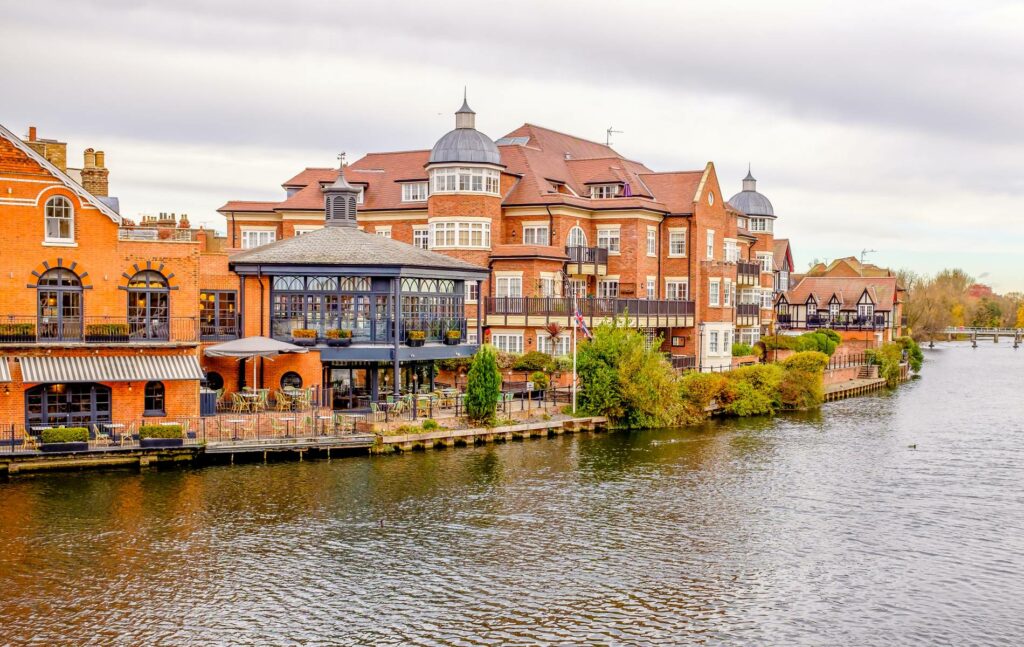
Just upstream of Maidenhead, Cookham is the only village in this selection, included for the character and standing that place it alongside the larger settlements on the river. It combines a settled village character with the connectivity buyers expect from a Berkshire address. The parish works through three connected hubs: Cookham Village around the High Street and the church, Cookham Rise around the station, and Cookham Dean spread across rural lanes towards Winter Hill.
Green Belt designation around the parish has helped preserve separation from neighbouring settlements, and conservation areas across the Village and Dean influence what can be done to existing properties.
Cookham’s cultural identity is shaped in part by the artist Stanley Spencer, whose work depicts streets still recognisable today.
Schools, walking routes via Cliveden, and a short station line to Maidenhead all contribute to the appeal for buyers searching towns on the Thames for a quieter village alternative.
Reading occupies a different position in the picture. As the western terminus of the Elizabeth Line and a long-established centre for technology employment, it is one of the few towns in this selection where the river sits alongside a working city rather than at the heart of village or market-town life.
For riverside property, a sought-after stretch runs along the outskirts of the town towards the Mapledurham Estate, where a small number of houses come with their own moorings and rural outlook. Access to the Chilterns National Landscape and the Berkshire Downs lies a short drive away.
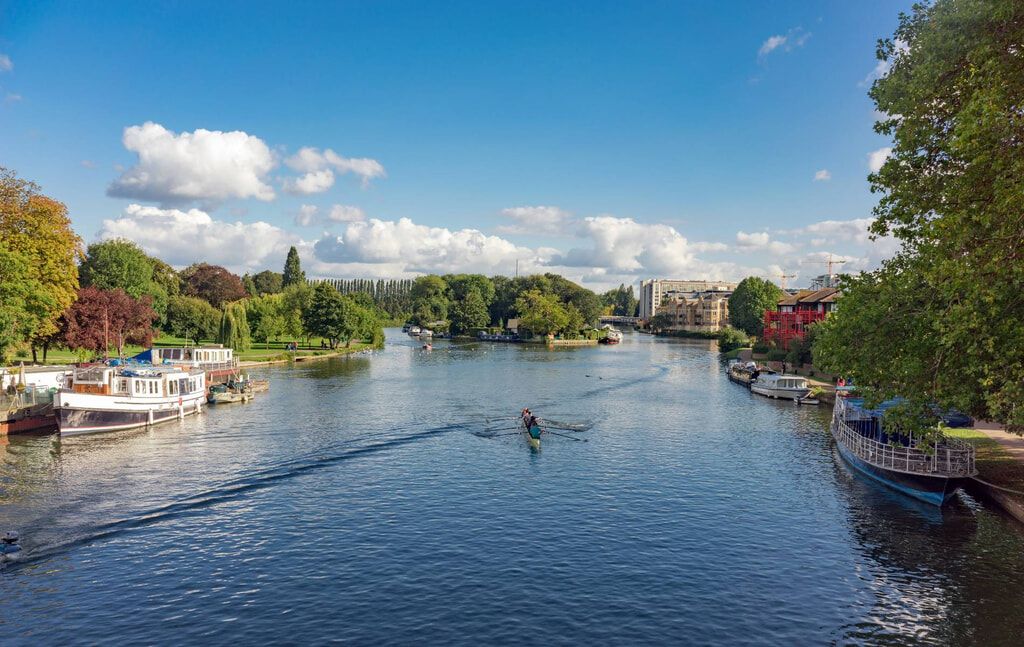
Henley sits on the Oxfordshire bank where the Chilterns National Landscape meets the river. The town is considered by some to be one of the prettiest towns on the Thames, and the reasons are visible from the bridge: Georgian frontages along the water, the regular pattern of the bridge and church tower, and a conservation area covering much of the town centre.
The town’s identity is shaped by rowing. Leander Club and the Henley Royal Regatta have anchored the calendar since the nineteenth century and continue to draw rowers, spectators and homeowners alike. Beyond regatta week, Henley functions as a working market town with established independent shops, restaurants and pubs.
Property includes period homes in the centre, larger Victorian and Edwardian houses on the rising ground above the town, and riverside houses that change hands quietly when they do appear.
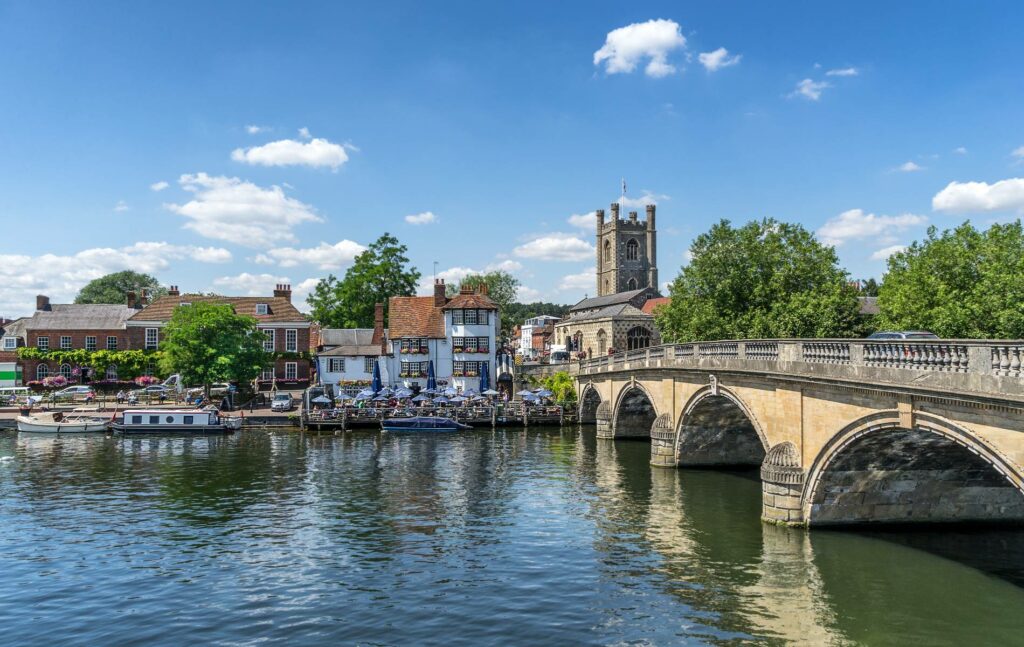
Where the upper river is rural and the middle reach is commuter belt, Kingston represents the urban Thames. Part of Greater London while remaining within the historic county of Surrey, the town has long pulled families out of central London for its combination of schools, shopping at the Bentall Centre, and direct access to Richmond Park.
Parts of the riverside fall within designations including the Riverside North Conservation Area and the wider Thames Policy Area, which can influence what may be built or altered along the bank. Sections of Lower Ham Road lie within or close to these protections.
Sporting infrastructure on and around the river runs from rowing clubs through to sailing and paddleboarding, which is part of Kingston’s appeal for many families looking beyond central London postcodes.
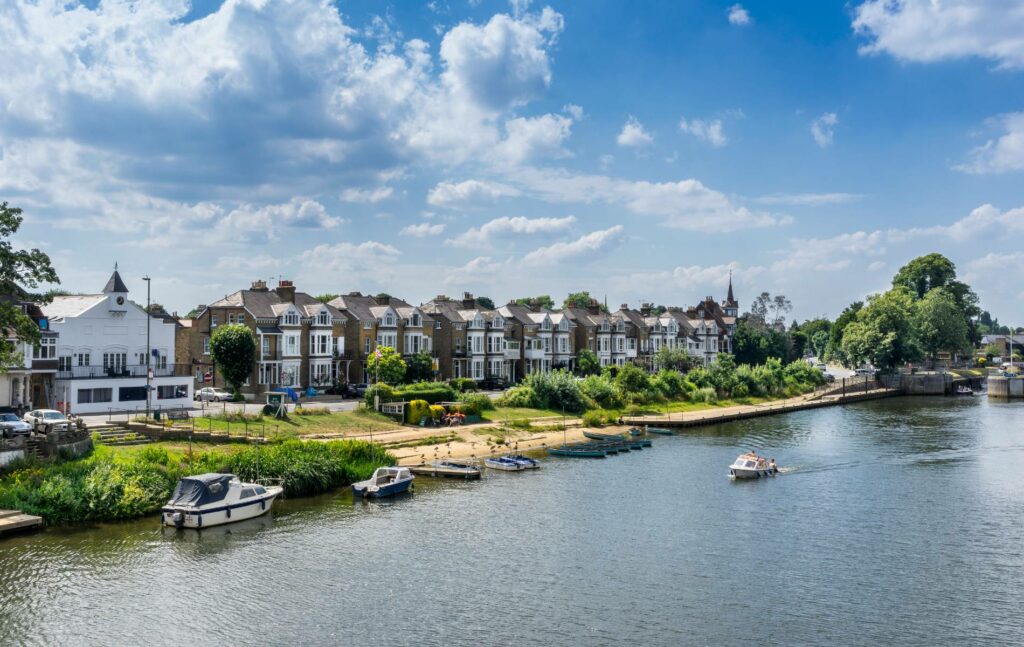
It helps to think of the river not as a single market but as three connected zones. The upper Thames (broadly Lechlade through Oxford, Wallingford and Abingdon, settlements that trace their charters back to the Saxon and early medieval period) is the more rural reach, with village settings and lower commuting pressure.
The middle reach through Henley, Marlow, Cookham, Maidenhead and Windsor is the Berkshire and Buckinghamshire commercial belt, where Elizabeth Line and Great Western infrastructure shapes value.
The London reach, from Hampton Court through Kingston to Richmond and Putney, is properly urban.
Each zone behaves differently. Stock characteristics, planning constraints and the kinds of buyer chasing each address all vary, and the right starting point depends on which of these takes priority in the search.
Searching for a riverside home along the Thames carries its own considerations. How a property actually relates to the water, whether moorings or riparian rights are involved, what conservation or planning designations apply, and how flood risk has been assessed locally rather than at the postcode level. These are the practical questions that shape a sound purchase.
We draw on long-standing knowledge of the Thames Valley and into Greater London, established relationships with the agents and solicitors who handle prime instructions, and direct experience of how individual riverside settings perform over time. That combination helps clients see beyond the photographs, weigh each home against what matters most, and identify opportunities that may not always reach widespread advertising.
If you are planning a move to a town on the Thames, our team would be pleased to discuss your search in confidence and review what is currently available, both on and off the market. Please contact Garrington for an initial conversation about your requirements.
The best places to live in Surrey each give a buyer something specific: a fast train into Waterloo, a...
When searching for a property with stables, the natural instinct is to begin with the house: the kitchen, the...
The common mistakes property buyers make are rarely dramatic. More often, they are small misjudgements early in a search...
There are many locations across the UK that offer a 60 minute commute to London, and the choice between...