







Best places to live in Surrey: A buying agent’s guide
The best places to live in Surrey each give a buyer something specific: a fast train into Waterloo, a...
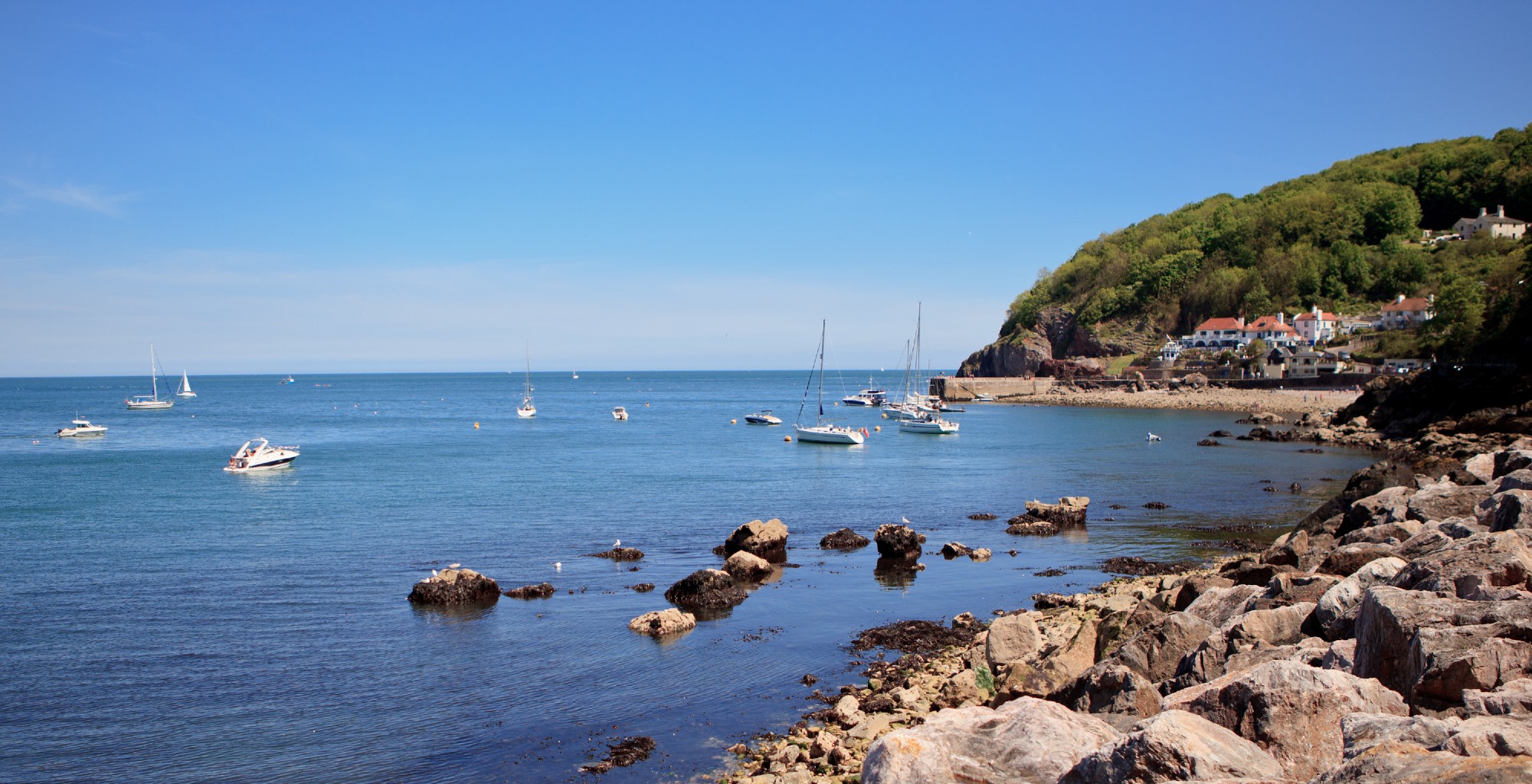
Leaving London for the coast holds an appeal that has changed little over the years: more space, sea air, a gentler pace, and the water close at hand.
What has changed is the temperament of the move. Buyers now approach it as a considered decision, and few treat it as a clean break from the capital. London usually stays in the picture, a place to keep working, to see friends, and often to keep a home in.
The question has shifted from whether to go, towards how to extend a London life to the water’s edge.
Homebuyers arrive at the same search from different directions, and leaving London for the coast tends to mean one of a few things. The first is relocating: moving a main home, with commute, schools and year-round life all in play. The decision turns on whether daily life works as well by the sea as it does in the city.
The second is buying a coastal second home, keeping London as the principal base and acquiring somewhere to retreat to at weekends and through the summer, where the calculation is weighted towards the economics of an additional property and how often it is used.
The third reverses that: making the coast the main home while keeping a small London base, a pied-à-terre for work, family or the occasional night in town. Each suits a different brief, and the places that serve them overlap, but not entirely.
Leaving London for the coast usually begins with a single question: where? The closest coastlines hold the seaside towns that London buyers return to most often, and the best coastal towns near London call for a clear sense of what you want before you start.
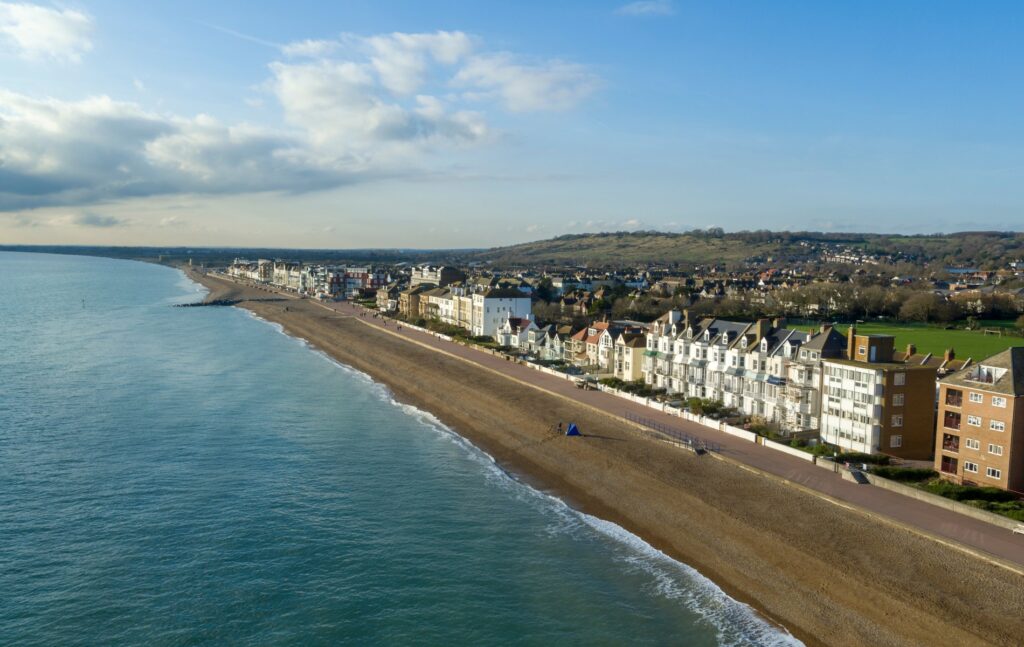
The Kent coast is the closest of these, and in our experience one of the most rewarding for a London buyer with a clear brief. Whitstable sets the tone, a working harbour town known for its oysters, weatherboarded cottages and a seafront where Victorian and Edwardian homes give way to colourful beach huts. It has long attracted a creative crowd, and it is no longer thought of as a value-led choice.
Further round the coast, Deal suits those who prefer their history quieter, with a conservation-area seafront, a strong food scene and handsome Georgian frontages. Inland, Sandwich is one of England’s finest medieval towns, its narrow streets and Cinque Port heritage matched by the draw of Royal St George’s for golfing households.
Margate sits at the more eclectic end, its fortunes lifted by the Turner Contemporary and the restoration of its Old Town, suiting buyers drawn to a creative, design-led seafront over a traditional one.
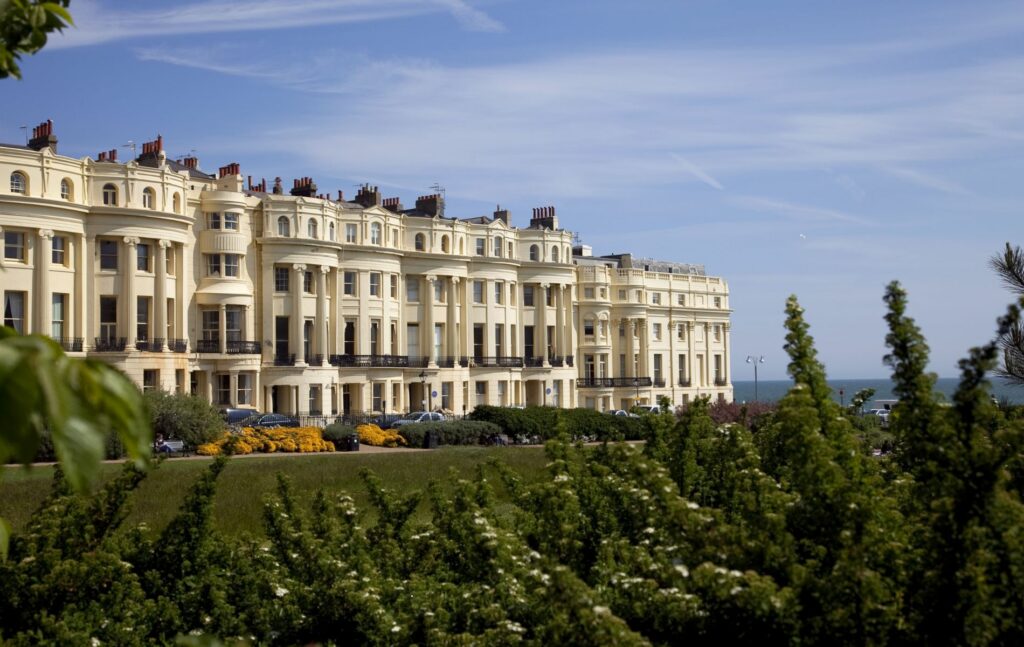
East Sussex offers more variety within a short stretch. Brighton remains the obvious anchor, a coastal city with Regency squares, a celebrated cultural life and direct trains that keep it within comfortable reach of London.
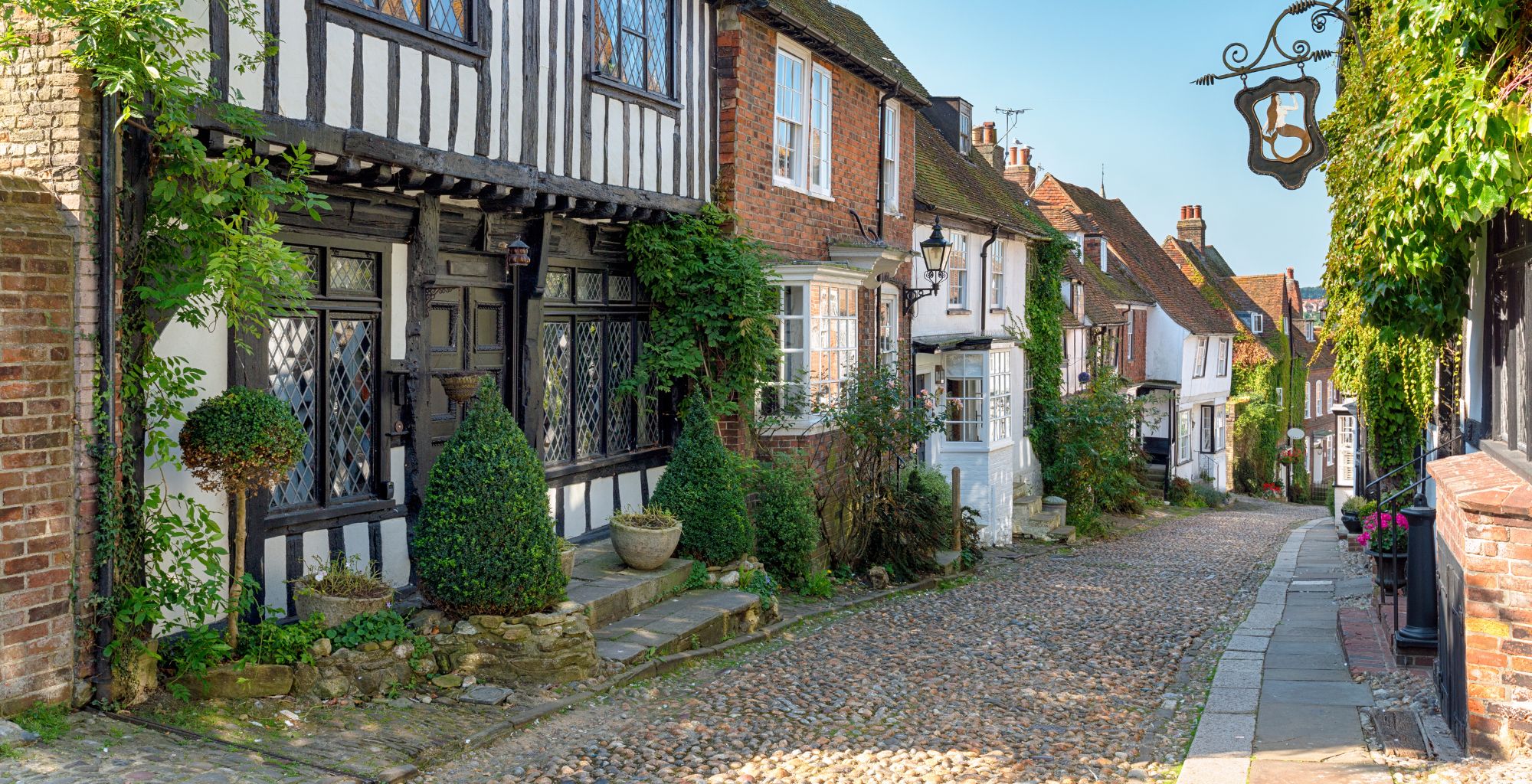
Its neighbour Hove is the quieter, more residential choice, prized for the substantial homes along its seafront roads and the kind of schools that relocating families tend to research closely. To the east, Rye is a different proposition: a cobbled hill town of timber-framed and Georgian houses, close enough to Camber’s sands to count as coastal.
Lewes, a little inland, offers fine Georgian streets and the South Downs on its doorstep, while Eastbourne’s Meads quarter, set beneath the Downs and Beachy Head, is the part that most repays a closer look.
Further from London, the Suffolk coast trades easy commuting for wide skies and a slower register. Aldeburgh, with its shingle beach, music festival and pastel-fronted high street, has long attracted those who want culture without crowds.
Southwold, a popular second-home town where the population swells through summer, offers a lighthouse, a pier and a green ringed by period houses, though that seasonal swing is part of the bargain. This stretch lends itself to a bolthole as much as a full relocation.
For a getaway rather than a commute, the West Country opens up the further-afield options. In south Devon, Salcombe is a yachting town of boutique-lined streets and sheltered estuary water, with Dartmouth nearby and its deep-water harbour.
The Dorset coast holds its own draws: the Sandbanks and Poole stretch, with its harbour and some of the best-known waterfront addresses in the country, and Studland, one of several villages by the sea where National Trust land and the chalk of Old Harry Rocks keep development at bay.
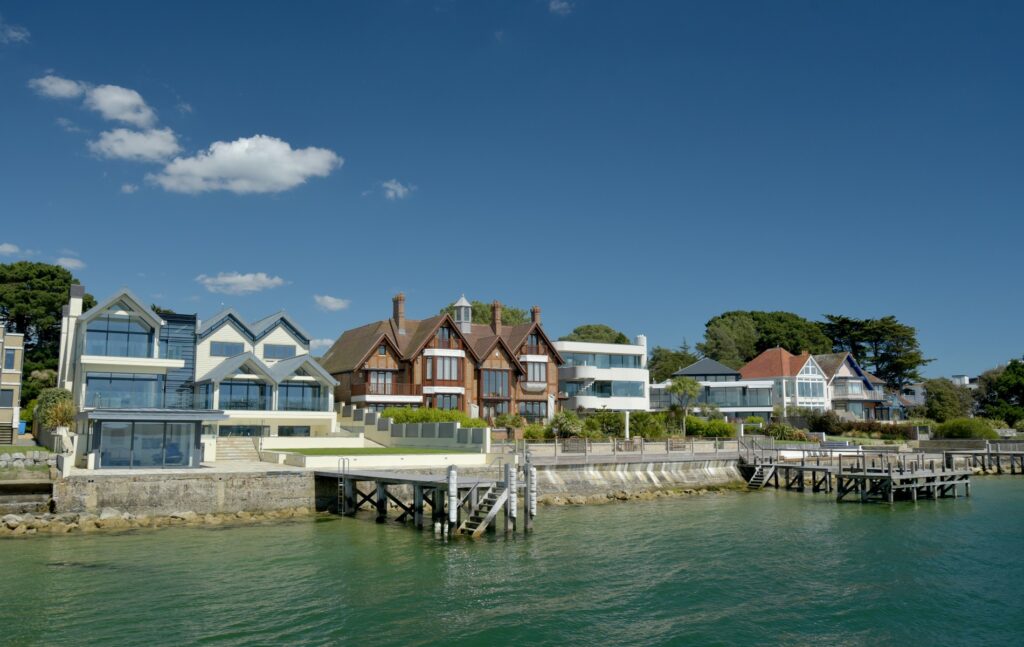
Cornwall sits further still, where Rock, Padstow and St Ives remain perennial favourites for a coastal second home. None suits a regular commute, which is why they appeal to the buyer keeping a London base.
For anyone leaving London for the coast who still works in the capital, connectivity is where the decision is often won or lost. The Kent coast is served by Southeastern’s high-speed trains into St Pancras, which bring Whitstable and Deal within a manageable run of central London for those travelling a few times a week.
Sussex relies on Southern services into Victoria and London Bridge, with Brighton among the better-connected options. The honest distinction is between the occasional and the regular commute. A journey that feels civilised twice a week can wear thin five days a week, once the door-to-door reality is added.
Buyers who expect to commute daily should test the full trip at the times they would travel, in both directions, before committing. Some of these coastlines sit within an hour of London, others well beyond, so judge a place by the real door-to-door journey, not the headline train time. A 30, 45 or 60-minute commute reaches very different places.
For families leaving London for the coast, schooling shapes the search as much as the sea view. Coastal Sussex and Kent both offer state and independent schools worth considering, and because a catchment affects daily logistics and house prices, it pays to research provision early, at the specific street rather than the town.
Beyond the school gates, the texture of year-round life deserves honest thought. A town that hums through August can feel altogether different in February, when visitor-facing businesses wind down and the population thins.
Spending time in a place across more than one season, ideally outside the summer, gives a far truer sense of whether it will sustain a full life rather than a holiday.
Local knowledge earns its place here. Someone who knows how a town lives in February as much as August can spare you much trial and error.
For those leaving London for the coast as a second home rather than a main move, the appeal has to be weighed against the realities of owning an additional property. In England, the higher rates of Stamp Duty Land Tax on an additional property add considerably to the cost from the outset.
Many local authorities in popular coastal areas can also apply a council tax premium on second homes, so the relevant council’s current policy is one of the first things to check. On a future sale, capital gains tax may be due on any increase in value, since the reliefs that protect a main home do not extend to a second one.
For anyone thinking of letting the property, the favourable tax regime that once applied to furnished holiday lets has been withdrawn, and the advantages it once carried have largely gone. None of this is a reason to hesitate, only to go in with the full cost picture rather than the brochure version. Because the figures shift with successive Budgets and differ across the UK, the sound approach is to take advice from a property tax specialist first.
Anyone weighing up leaving London for the coast should know how a seaside town feels out of season, and that candour is rarely in the sales copy.
In the quieter months, the busiest resort can feel like a different town.
Cafes and shops that thrive in July may close for weeks at a stretch, the seafront empties, and the sociability of summer can give way to a quiet that some find restorative and others isolating.
This is not a flaw to hide. It is the truth of coastal life, and knowing it in advance is what separates a happy move from a regretted one. The surest way to find out is to rent in an area for a season first, ideally through the winter. A few weeks living as a resident, rather than visiting as a guest, tells you more than any summer weekend.

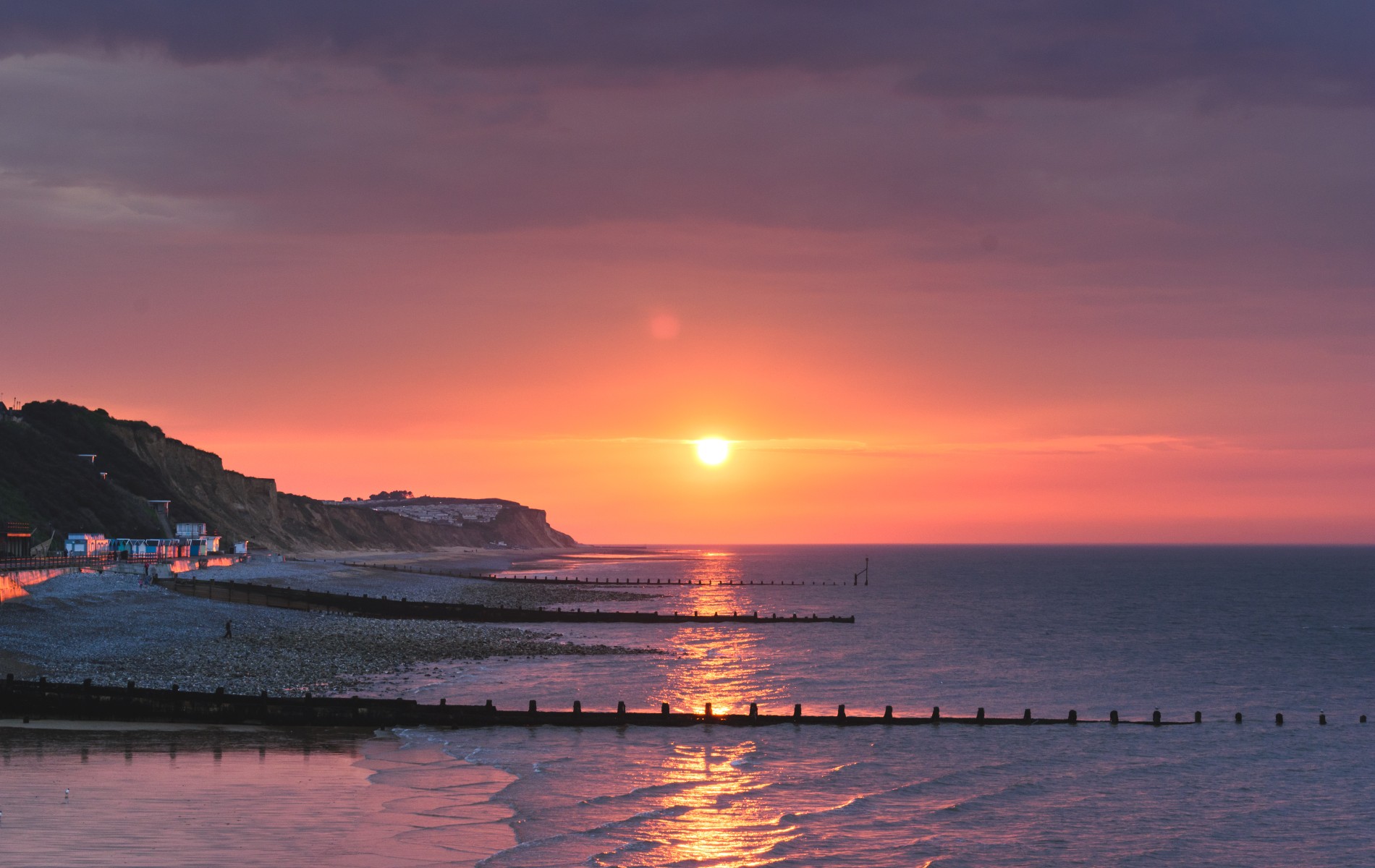
Strip away the practicalities and the reasons people are drawn to the sea are constant. There is the sea air and the quality of the light, sharper in winter and softer through the long summer evenings. There is the restorative value of open water and a wide horizon, the walking, the swimming, the space the city lacks.
These are not passing fashions. They are the durable appeal beneath every coastal move, and they are why leaving London for the coast endures long after the moment that first made it fashionable.
The difference between finding a property on the coast and finding the right one often comes down to access, timing and advice, particularly where some sought-after homes may change hands quietly through established networks before they reach the open market.
Garrington can help with every version of leaving London for the coast. For a main home on the coast, our property finding service brings local knowledge and negotiation. For a weekend or holiday home, our buying a holiday home service is built around exactly that brief. And for those keeping a foot in the capital, our London team can secure a pied-à-terre while a regional consultant leads the coastal search, with the two kept in step.
A conversation about how we can help carries no obligation. Please get in touch.
The popular choices cluster on the closest coastlines. In Kent, Whitstable, Deal and Sandwich draw steady interest; in East Sussex, Brighton, Hove and Rye are perennial favourites. The Suffolk coast around Aldeburgh and Southwold appeals to those wanting more distance, while south Devon, Dorset and Cornwall remain in demand for a second home further afield.
The right town depends on what you want from it. For the shortest reach and an active year-round scene, Whitstable and Brighton are hard to better. For quieter period character, look to Deal, Sandwich and Rye. In our experience, the best choice matches a town’s rhythm, commute and housing to how you intend to live.
Leaving London for the coast suits many people, provided the decision is made with open eyes. The lifestyle gains are real, but so are the practicalities: the commute if you still work in London, the change of pace out of season, and the running costs of a property by the sea. Renting before buying, and being honest about how often you will make the journey, are the surest ways to know.
Many towns worth considering as a home also make for an easy day trip, which is one of the better ways to test an area before committing. Whitstable, Brighton and Rye are all reachable from London for the day. A day out shows a town at its best, though; living there, or renting for a season, reveals the rest.
The best places to live in Surrey each give a buyer something specific: a fast train into Waterloo, a...
When searching for a property with stables, the natural instinct is to begin with the house: the kitchen, the...
The common mistakes property buyers make are rarely dramatic. More often, they are small misjudgements early in a search...
There are many locations across the UK that offer a 60 minute commute to London, and the choice between...