


Buying a property with stables: A guide to equestrian homes
When searching for a property with stables, the natural instinct is to begin with the house: the kitchen, the...
There are many locations across the UK that offer a 60 minute commute to London, and the choice between them is far less obvious than the hour itself suggests.
Two towns can share the same headline train time and offer entirely different daily lives, once the walk to the platform, the reliability of the service and the trek across the capital at the far end are counted in.
A home within about an hour of London tends to suit people who need the capital some of the week rather than all of it. That pattern is most pronounced in higher-earning, graduate-level professional roles, which is to say among exactly the people most likely to be weighing a move out to the country or to a smaller city in the first place. For them, the appeal is space, a garden, a market square and a school run measured in minutes, without severing the tie to a London salary or a London office.
The hour, though, is the easy part of the question. The hard part is what the hour is made of. A timetable measures a train from one platform to another on the fastest service of the day. It says nothing about the journey at either end of that train, which is where a workable commute and a wearing one part company. The sections that follow take those variables in turn, then look at each location in detail.
An hour on a fast line usually places a buyer somewhere in the region of 30 to 50 miles from central London. That is a useful starting figure and a misleading one, because the mileage varies enormously with the speed of the line. An hour out of Marylebone on the Chiltern route reaches Banbury, comfortably beyond that band. An hour on a stopping service from parts of Kent may not clear 30 miles.
The lesson is that line speed, not distance, decides what an hour will buy.
A buyer who searches a property portal by drawing a radius around London may therefore overlook the quickest towns and concentrate on slower ones that merely look close. The map can flatter the wrong places.
Mapping tools that band stations by journey time are useful for a first pass, and worth using. What they cannot tell you is whether the fast train is standing-room-only by the time it reaches your platform, or whether a village three miles from the fast station serves you better than the town built around it. Those are the questions that separate a workable move from a regretted one, and they are answered on the ground rather than on a screen.
Every advertised time, here and elsewhere, is measured station to station. The commute a buyer will actually live is longer at both ends, and the difference can make a location less ideal than it first appeared.
A realistic journey has five parts: the walk or drive to the station, a margin for delay, the train itself, the onward leg from the London terminus, and the final walk to the office. Any one of them can undo a flattering headline figure.
Which London station you arrive at can count for more than how long the train takes.
A 48-minute train into King’s Cross and 25 minutes across town can be a less convenient commute than a 56-minute train into Waterloo if the office sits on the South Bank. Rather than focus on a fast journey time, work out which terminus serves your workplace and add the cross-London leg.
Station parking is the other quiet constraint. At the more popular commuter stations, season car park spaces carry waiting lists, so homes within walking distance of a fast station tend to carry a premium the portals may not label. Frequency deserves the same attention as speed: a shorter journey on an hourly service can make for a harder day than a longer one on a train every fifteen minutes, because a missed connection costs whatever the gap between trains happens to be.
The most reliable test is to make the journey at the hour you would really travel, on an ordinary weekday rather than a quiet Sunday. This single check turns a plausible commute into a proven one.
The cost of getting to London is the part of this decision that buyers most often get wrong, because two costs move in opposite directions. The further out you go, the less the house tends to cost and the more the season ticket does. Those two lines cross somewhere, and where they cross is different for every household, depending on income, deposit and how often the train is actually used.
A season ticket is a housing cost in all but name.
Buyers routinely compare two towns on purchase price while filing the rail fare under a separate heading, and over a decade the difference in fares between two locations can rival the difference in what the homes cost. A better comparison is to multiply the likely fare by ten years and set that figure beside the price gap between the two towns on the shortlist.
It helps to understand that fares are not a single thing. Some, such as season tickets and Off-Peak fares, are regulated and set nationally. Others are set by the operator. The Underground leg at the London end sits outside both. A commuter who grasps that distinction can work out their own likely outlay far more usefully than any single quoted figure would allow. The same applies to the choice between an annual season ticket and a flexible one: for a two or three-day-a-week commuter that is a piece of arithmetic to be worked through, not a default to assume.
What a reader in this position really wants is a straight answer on whether one town represents better value than another. The answer is that it depends on their fare, their frequency of travel and their horizon, and this is the calculation we work through with clients before they commit.
The arithmetic here is simple, even if working patterns change. An hour each way at two days a week comes to about four hours of travelling. At five days it comes to roughly ten, which over a working year is a meaningful slice of a person’s waking life.
A household choosing a location on the assumption of two office days should ask what the same journey feels like at four or five. Employer expectations change; the house does not, and a commute taken on for two days a week can quietly become four, by which point the decision is hard to reverse.
The constructive response is to buy commute resilience: a location that remains tolerable at five days a week, not merely survivable at two. Applied as a stress test to a shortlist, that single question tends to reorder it.
Banbury sits in north Oxfordshire, just east of the Cotswolds, and its appeal rests on a combination the surrounding villages cannot match: period stone houses, open country on the doorstep and a fast line into London. Chiltern Railways lists its quickest direct service to Marylebone at 51 minutes, though a typical journey runs well over the hour, so it pays to know which departures are the quick ones. Services run roughly half-hourly, and there are regular trains into Birmingham as well.
What makes Banbury distinctive is best understood by comparison. In our experience, buyers are often drawn first to Cotswold towns such as Chipping Norton and Kingham, yet neither offers the rail link that Banbury does, and for anyone who needs London regularly that link is decisive. Villages such as Bloxham and Eydon suit those who commute irregularly and do not mind a short drive to the station. Independent schooling in the area includes Tudor Hall and Bloxham School.
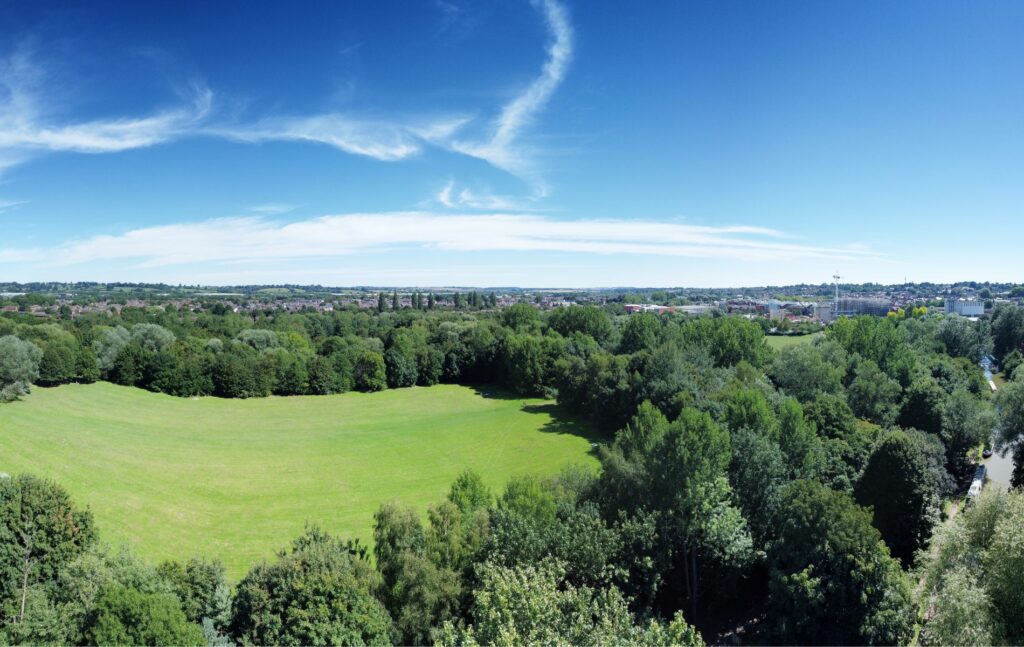
Winchester, once the capital of England, is a cathedral city whose appeal to families and downsizers alike is easy to see: a long history, good schools and open country at its edges. It is small enough to feel like a market town and large enough to sustain a full life year-round, with markets, restaurants and a cultural calendar of its own. The fastest trains reach Waterloo in around 56 minutes.
The city is naturally hilly, and many homes enjoy views across it. To the south of the centre, St Cross is one of the areas buyers ask about most, with Victorian and Regency houses on quiet streets and water meadows close by. State schooling is well regarded, and independent options include Winchester College, St Swithun’s School and The Pilgrims’ School, now part of Winchester College following its 2025 merger. Ready access to the South Downs National Park is part of the daily appeal for families buying in Hampshire.
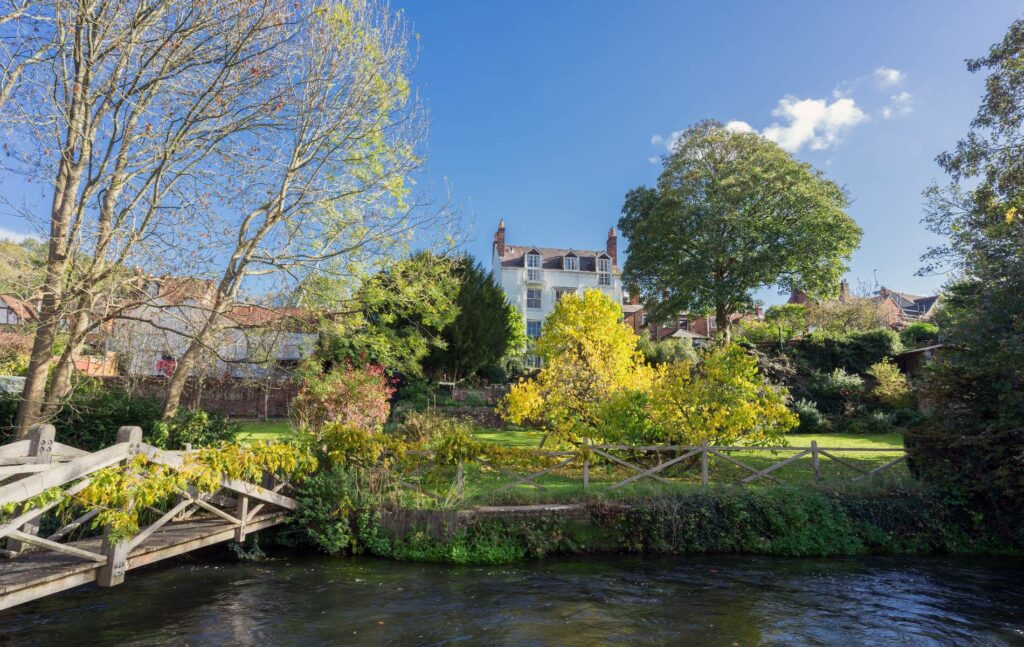
Farnham is a Georgian market town at Surrey’s western edge, close to the Hampshire border, with green spaces on its doorstep and a quick service into the capital. It is a strong candidate for anyone weighing a 60 minute commute to London. The town centre carries a mix of independent shops and familiar names, with places to eat that keep it busy in the evenings as well as by day.
Property in the centre is largely period: grand Georgian houses, streets of Victorian terraces and semi-detached homes, and 1930s houses from between the wars. Compton Way, running east towards Farnham Golf Club, has large gated houses in a range of styles, as does the Great Austins area. Families are drawn by the schools, the countryside and the leisure on offer. The A31 leads to the A3 at Guildford for those driving, and property across Surrey rewards buyers who know the individual roads.
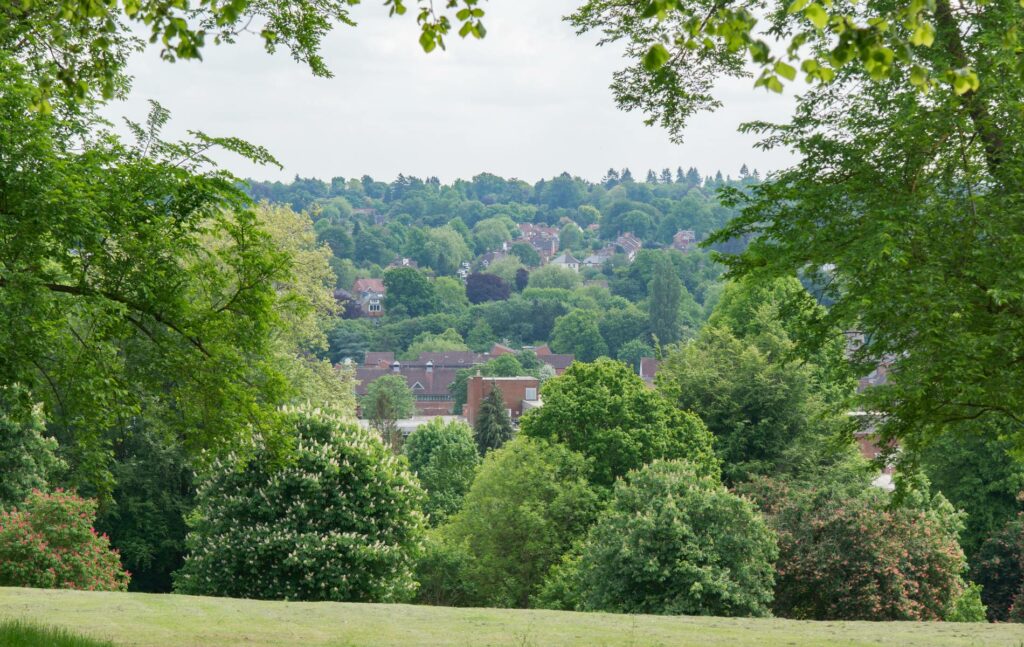
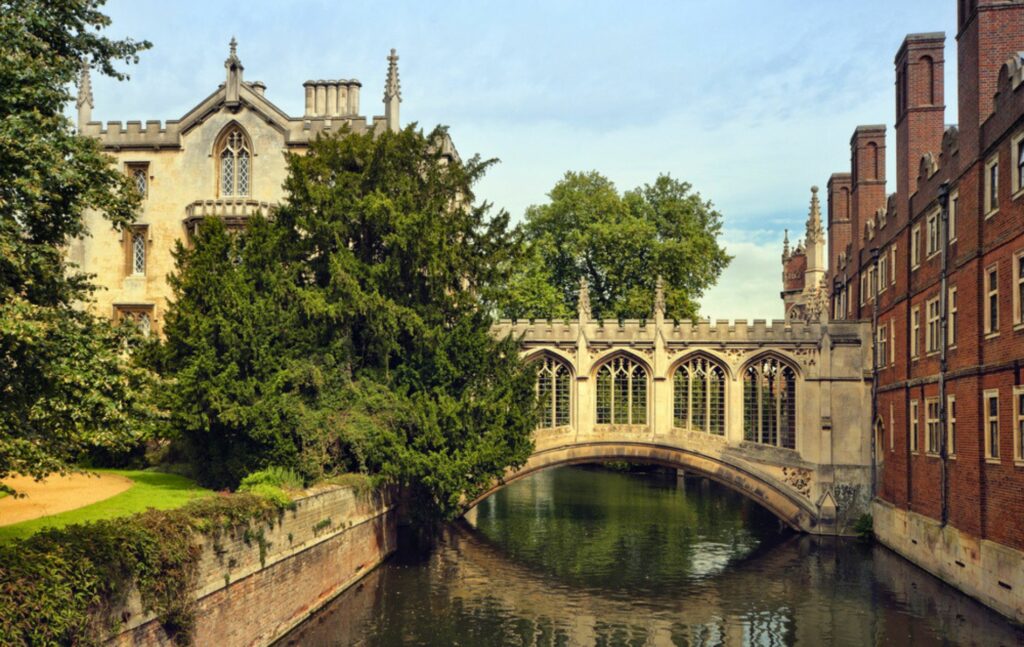
Cambridge pairs one of the world’s oldest universities with a quality of life that keeps demand high whatever the market is doing. The fastest trains reach King’s Cross in around 48 minutes, and because that terminus sits on the northern edge of the City and the tech quarter around it, the onward leg is short for many who work there.
The housing runs from riverside period homes in Newnham and the streets off the Chesterton and de Freville side of the city to newer, well-specified apartments around the redeveloped station quarter at CB1, which suits buyers who want to walk to the platform. Families relocate here for the schools as much as the setting, among them The Perse School, The Leys School and Stephen Perse Cambridge. Cyclists, walkers and rowers find the city built for them. For those needing London regularly while working locally, buying in Cambridge answers both needs.
Odiham is where the drive-to-station question becomes concrete, because the village has no station of its own. Its commuters use Winchfield Railway Station and Hook Railway Station, a short drive away, from where the fastest services reach Waterloo in around 50 and 54 minutes respectively.
On the quick trains that puts Odiham inside the hour, though typical journeys sit closer to it, which is worth knowing before you buy. This is the pattern across much of rural Hampshire: many village homes sit a few minutes from the platform rather than on top of it, and a buyer willing to make that short drive has a wider choice.
The village itself is handsome, with individual shops and restaurants set among half-timbered Tudor and symmetrical Georgian buildings along the High Street. Crondall, Long Sutton and Upton Grey are the near neighbours buyers tend to consider alongside it. The Basingstoke Canal draws walkers and canoeists, and Newlyn’s Farm Shop, with its café and cookery school, is a local institution. The M3 is joined at Hook, giving quick road access towards the M25.
Rugby is a Warwickshire market town with a strong identity and, on the fastest Avanti West Coast services, a quicker link to London than its distance from the capital would imply, with Euston reached in around 49 minutes. West Midlands Trains also serves the route but takes considerably longer, so the service you choose makes a real difference to the day, a point worth checking against the timetable rather than the headline figure.
The town is best known for Rugby School, founded in 1567, where the game of rugby football is said to have begun in the nineteenth century. Much of the town’s architecture is Victorian, built as Rugby grew after the railway arrived in 1838, which is why so much of the housing is solid period terracing and larger villas from that era, alongside newer homes towards the edges.
Parks such as Caldecott Park give the centre room to breathe. For road users the M1 and M6 are close at hand, and buyers looking further afield across homes in Warwickshire will find the county opens up quickly from here.
Newbury is an old Berkshire market town whose commuter credentials are stronger than many buyers realise: the fastest trains reach Paddington in around 40 minutes, with typical services closer to 48, well inside the hour either way. That speed, combined with a historic centre and open country all around, is the town’s real draw.
The centre is Georgian at its core, with Victorian terraces spreading out from it and larger houses along the river and in the villages beyond, places such as Kintbury and the settlements towards the Downs. The racecourse is a defining feature, and the Kennet and Avon Canal runs through the middle of town, giving walkers and cyclists a route straight out into the countryside.
The Newbury Spring Festival brings classical music to the town each year. Road links are good, with the A34 connecting Oxford and Southampton and the M4 running east to London, and property across Berkshire spans a wide range from town-centre period homes to substantial village houses.

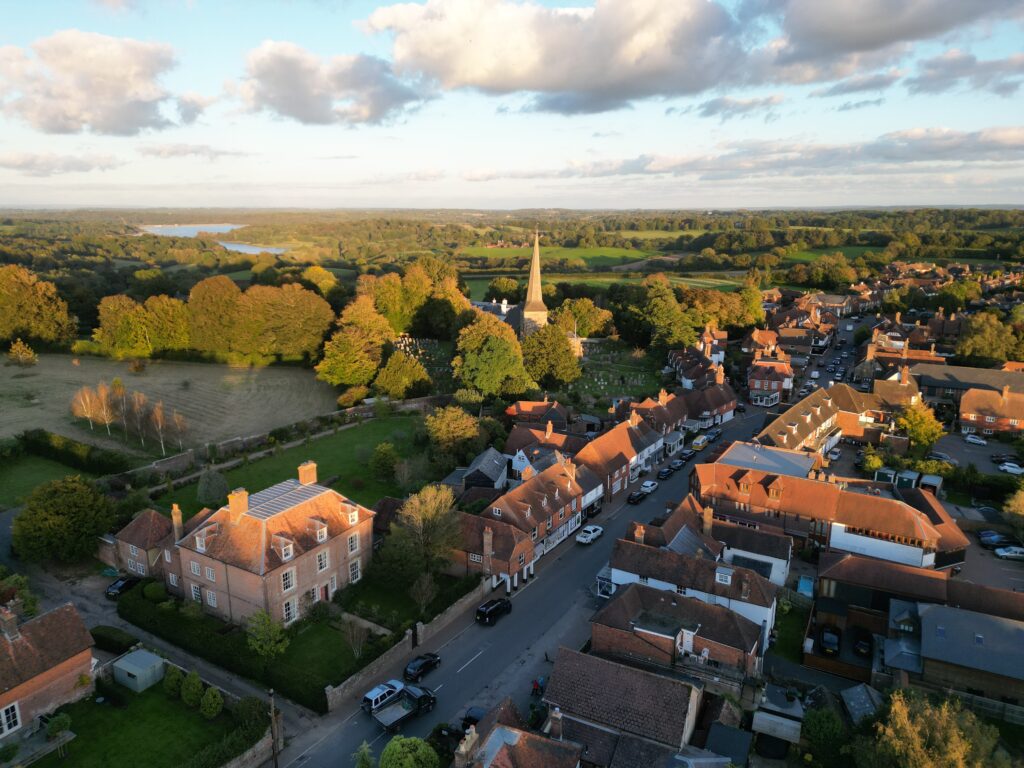
Wadhurst is a small town in the High Weald of East Sussex, seven miles south-east of Royal Tunbridge Wells, and its reputation rests on the place itself rather than any single accolade: period timber-framed and tile-hung houses, a working High Street, and a setting of woods and fields that the surrounding country designation exists to protect.
The fastest trains reach Charing Cross in around 1 hour 2 minutes, a little over the hour, which many here consider a fair exchange for what the town and its setting offer. It remains a place that suits those wanting a 60 minute commute to London who will accept a few minutes more for the surroundings.
Bewl Water, the largest stretch of open water in the South East, sits close by and offers sailing, walking and fishing. The proximity to Tunbridge Wells matters too, putting a full range of shops, schools and a mainline alternative within a short drive, which broadens the appeal for families who want a village base without giving up town amenities.
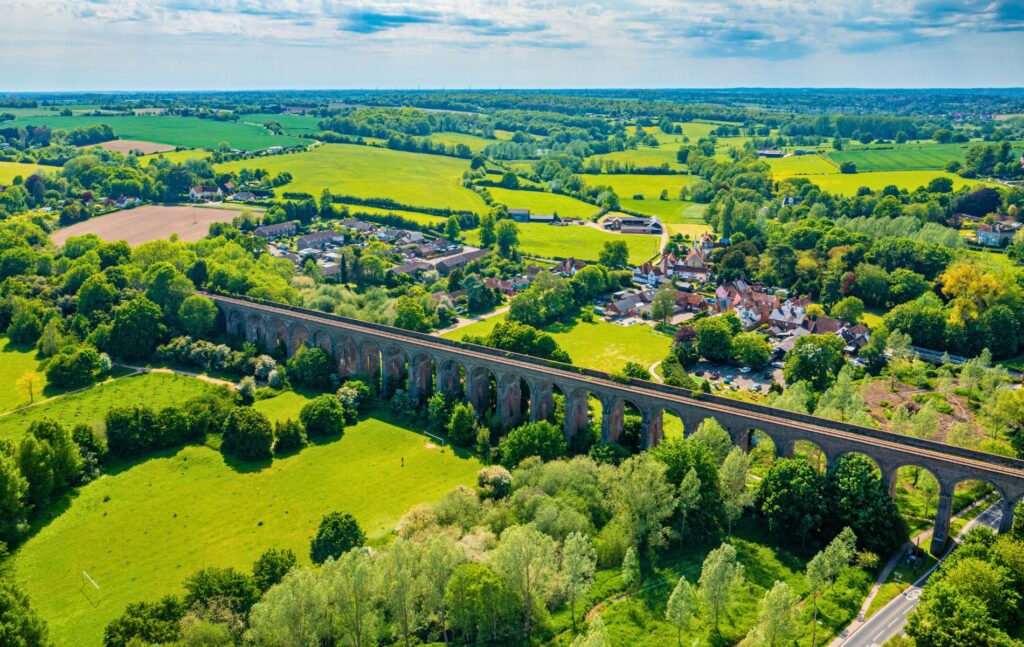
Colchester is a city in Essex about 60 miles north-east of London. It received city status in 2022 as part of Queen Elizabeth II’s Platinum Jubilee Civic Honours. Believed to be the oldest recorded town in Britain, with roots in the Roman conquest of 43AD, it carries its history openly, from stretches of the Roman wall to the eleventh-century castle and its park. The fastest trains from Colchester North reach Liverpool Street in around 47 minutes.
Much of the centre is Victorian, built out after the railway arrived in 1843, which explains the character of a good deal of the housing. North of the High Street lies the Dutch Quarter, a pocket of pastel-coloured houses on narrow streets ranging from the sixteenth century to the modern day. Buyers also look to Lexden and to the villages towards Dedham Vale for larger homes with more land, and the Essex market more broadly offers space and period character within easy reach of the City.
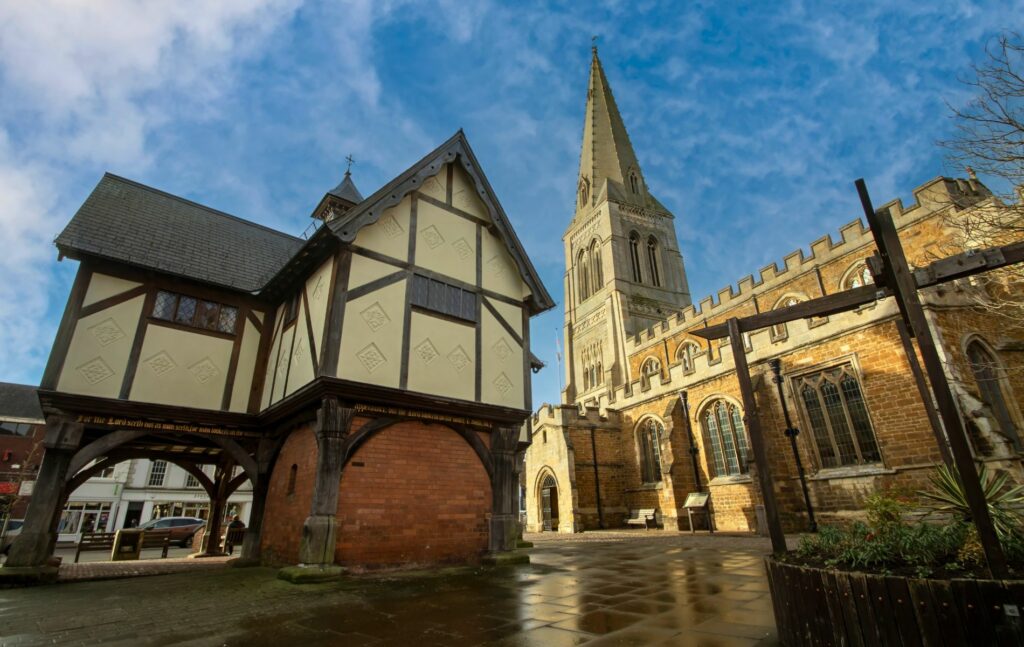
Market Harborough is a Leicestershire market town between Leicester and Northampton that delivers a workable 60 minute commute to London, with the fastest East Midlands Railway services reaching St Pancras International in around 56 minutes. The station also gives direct access to Leicester and Nottingham, which broadens the town’s appeal to anyone whose work is not solely in the capital.
The centre is largely Georgian, and among its landmarks is the Old Grammar School, a schoolroom built on stilts in 1614 so the butter market could be held sheltered beneath it, the kind of detail that fixes a place in the memory. The River Welland runs through the town and an arm of the Grand Union Canal reaches into it, ending at the Union Wharf marina. Housing ranges from period townhouses in and around the centre to newer family homes on the edges and substantial houses in the villages nearby, giving buyers a broad choice.
Haslemere sits in the south of Surrey, about 13 miles from Guildford, in the heart of the Surrey Hills. The fastest trains reach Waterloo in around 50 minutes, with typical services closer to the hour, and there are direct trains to Portsmouth as well. It is known for period timber-framed and tile-hung houses and for a setting that puts protected countryside on every side.
The town has two distinct centres, and the distinction is worth knowing: the older High Street, with its independent shops and pubs, and Wey Hill, a later development to the west with a more everyday range of amenities. Around them, buyers look to areas such as Shottermill and the villages towards Grayswood for family houses with gardens and space. Swan Barn Farm, an area of ancient woodland and pasture owned by the National Trust, runs almost into the town. For buyers drawn to this part of Surrey, the balance of connectivity and country is the attraction.
Brighton is the one coastal option featured here, and the clearest case in this article of buying a lifestyle that happens to be commutable rather than a commute that happens to have a lifestyle. Fast services reach Victoria in around an hour, while Thameslink runs the same line on through the City, calling at London Bridge, Blackfriars and St Pancras without a change, which for many workers removes a cross-London leg. Victoria and the City stations serve very different parts of London, so the right route depends on where the office is.
For commuters, Preston Park is often the point rather than the seafront. A stop before Brighton, with fast trains reaching Victoria in around an hour too, it and neighbouring Fiveways give buyers a place in the city a short way back from the seafront. Housing here favours substantial Victorian and Edwardian villas on tree-lined streets. Anchored in commute practicality rather than the appeal of the sea, it is a serious option for a household that wants both.
These locations all sit around a 60 minute commute to London, but the station you reach at the London end should shape the decision as much as the headline time, since many will face an onward Underground journey once the train arrives. Factor in the whole journey, door to door, before you commit.
There are also homes within an hour of London that need a short drive to the station, and for buyers who want a properly rural setting these are often worth pursuing, since they sit outside the obvious commuter hotspots and tend to offer more house and land. The trade is a few minutes in the car each morning for a quieter setting, and for many it is the right one. Knowing which villages fall within a fast station’s catchment is where guidance from a local buying agent can be invaluable.
How homes in the most sought-after commuter villages are bought and sold is not always visible from the outside. A proportion change hands privately, through long-established professional relationships and word of mouth, sometimes before they ever reach a portal. It is one reason that a buyer working through someone with strong local connections tends to see more than the public listings show.
When we assess a commuter location for a client, the questions are the ones this article has raised. Which terminus does the work require, and how long is the leg beyond it? Is the quoted time the fast service or the typical one? And the test that matters most: does the journey still work on a bad morning at the busiest time, not an easy off-peak run? Answering those is how a buying agent assesses a location before a client ever views a house.
For anyone weighing a move to a commuter location, the difference between a workable choice and a less than ideal one, usually comes down to detail: the true door-to-door time at the hour you would travel, the catchment of a fast station, and the local knowledge that tells one village from the next. Those are the things we work through with clients before they commit, drawing on relationships and local insight that a portal search is not built to provide.
Conducting searches across the UK, our property finders have long experience finding homes in the right locations for commuting into London. To talk to us about your plans, your requirements and the locations on your shortlist, and to learn more about our services, please do contact us, without obligation.
There is no fixed threshold, and tolerance depends far more on how often the journey is made than on how long it takes. An hour twice a week is a very different proposition from an hour five times a week, and the arithmetic adds up quickly over a working year. The practical test we apply with clients is not whether the journey is bearable on a good day, but whether it is still bearable on a bad one in February, made four days a week. If it passes that, the distance is workable.
The one closest to your workplace, because the onward leg across London can easily exceed the difference in train times between two towns. A fast train into the wrong terminus, followed by a slow trip across the capital, can leave you further from your desk than a slower train into the right one, once the cross-London leg is counted. It is the question buyers most often fail to ask until someone asks it of them, and it frequently changes the shortlist once they do.
Yes. More flexible arrangements have widened the field, putting towns within reach that would once have been considered too far for a daily commute. The caution is that a decision resting on a set number of office days should be stress-tested against more of them, because employer expectations can change while the house cannot. The most resilient choice is a location that would still work if two days a week became four, rather than one that only works at two.
When searching for a property with stables, the natural instinct is to begin with the house: the kitchen, the...
The common mistakes property buyers make are rarely dramatic. More often, they are small misjudgements early in a search...
Few homes hold the imagination quite like houses in the woods. A house held in privacy by mature trees,...
Georgian towns in the UK hold a particular appeal for buyers who want architecture with proportion, order and a...