Best places to live in Surrey: A buying agent’s guide
The best places to live in Surrey each give a buyer something specific: a fast train into Waterloo, a...
Georgian towns in the UK hold a particular appeal for buyers who want architecture with proportion, order and a sense of permanence.
What sets them apart is scarcity. The supply is effectively finite: little of what was built between 1714 and 1837 can be replicated, and the best-preserved examples tend not to stay available for long. That is what creates the quiet competition whenever a good one appears.
This piece looks at ten of the UK’s Georgian towns where the period survives most completely, how to tell Georgian property apart from Victorian and Edwardian, and what living in a period home of this kind actually involves.
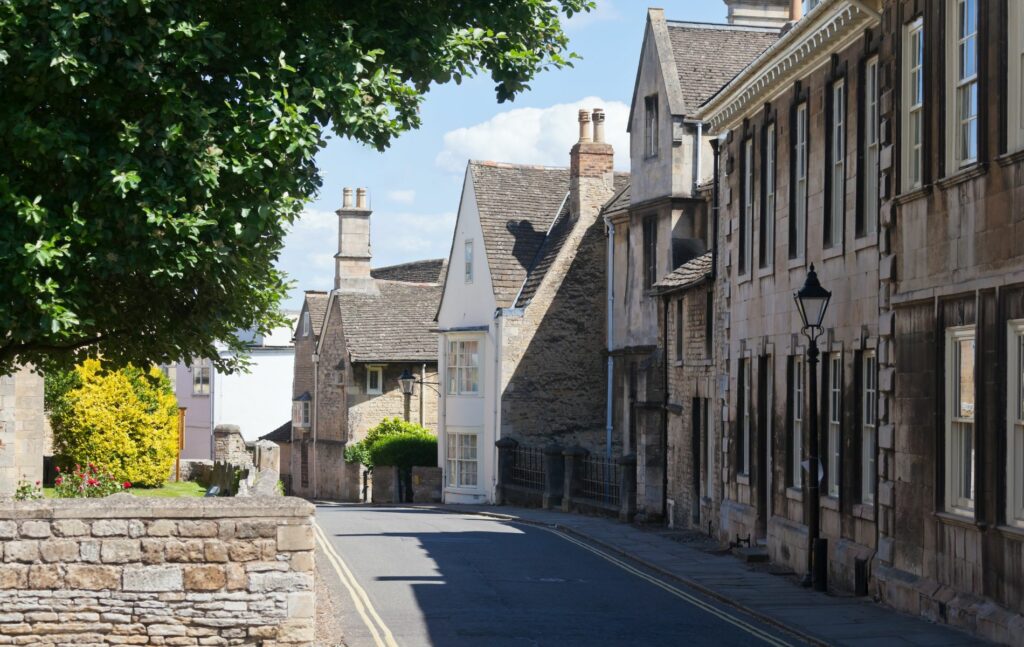
Among the UK’s Georgian towns, Stamford makes its case on density. The town holds something in the region of 600 listed buildings, giving its limestone streets a consistency that few English towns can match.
Stamford sits on the border of Lincolnshire and Rutland, with Rutland Water around fifteen minutes away for sailing, walking and open-water swimming.
Road and rail connections are good, and the schools draw families who want a period setting without cutting themselves off. Completeness of this kind comes with a catch, though. The best houses here behave as they often do where Georgian property is scarce: they may change hands discreetly, and a buyer searching alone can wait a long time for the right home to appear.
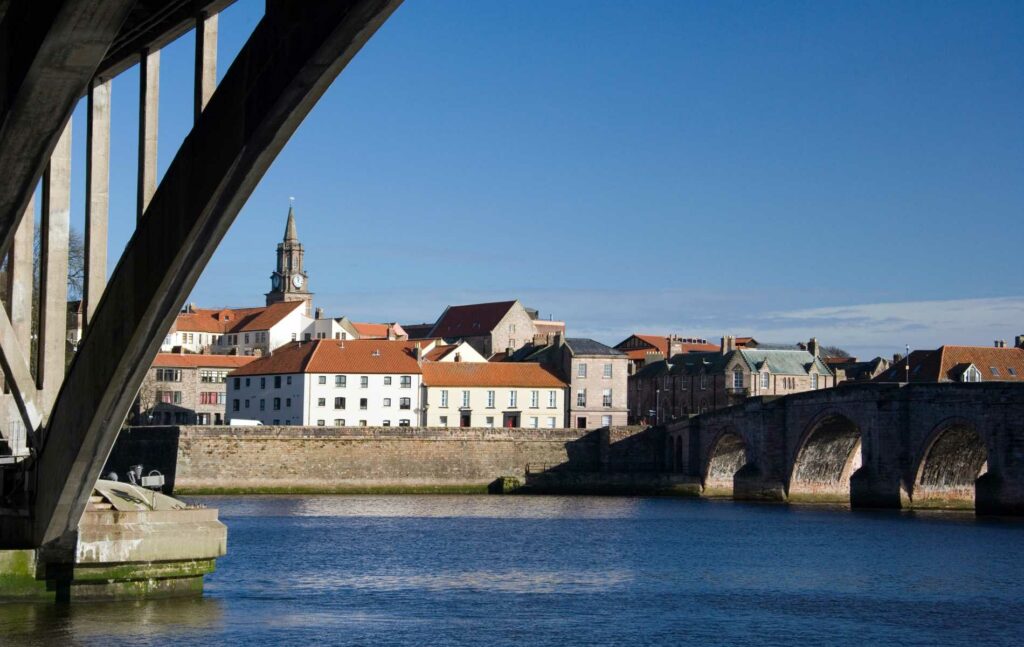
Berwick-upon-Tweed sits at the very top of England, on the river that gives it its name, and a good number of its houses look straight out over the water. That river position is the draw. So is the scale of what survives here, more than most southern buyers expect this far north.
The town keeps a working cultural life around The Maltings Theatre and Cinema, alongside artisan shops, small bars and galleries, and it is under fifty minutes by rail to either Edinburgh or Newcastle.
The honest counterpoint is distance. Berwick is a long way from almost everywhere else, and that relative isolation is the price of its space and its outlook. For some buyers, that is precisely the appeal of Georgian Towns set apart from the crowd.
Holt owes its character to disaster. Much of the town was rebuilt after the Great Fire of 1708, which is why its high street reads so evenly Georgian rather than accumulating in layers across several centuries.
The result is a coherence few Norfolk towns can claim, softened by independent shops, antique dealers and galleries. A heritage steam railway runs nearby, and the unspoilt North Norfolk coast lies close enough to reach for an afternoon.
Buyers drawn to Holt, like many of England’s Georgian Towns, tend to want the pairing of a compact, walkable centre with open coast within easy reach, a combination that holds its appeal well beyond a first summer.
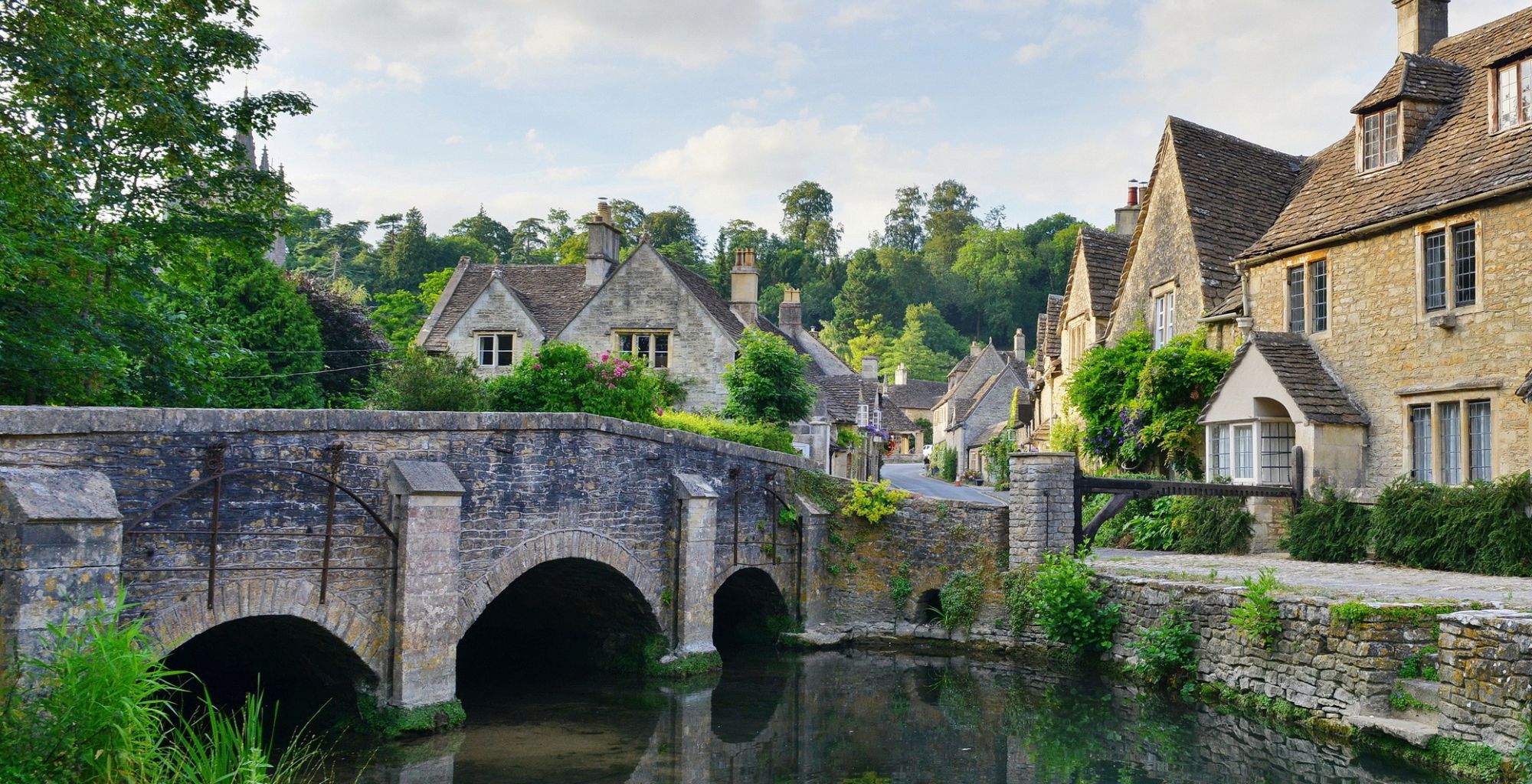
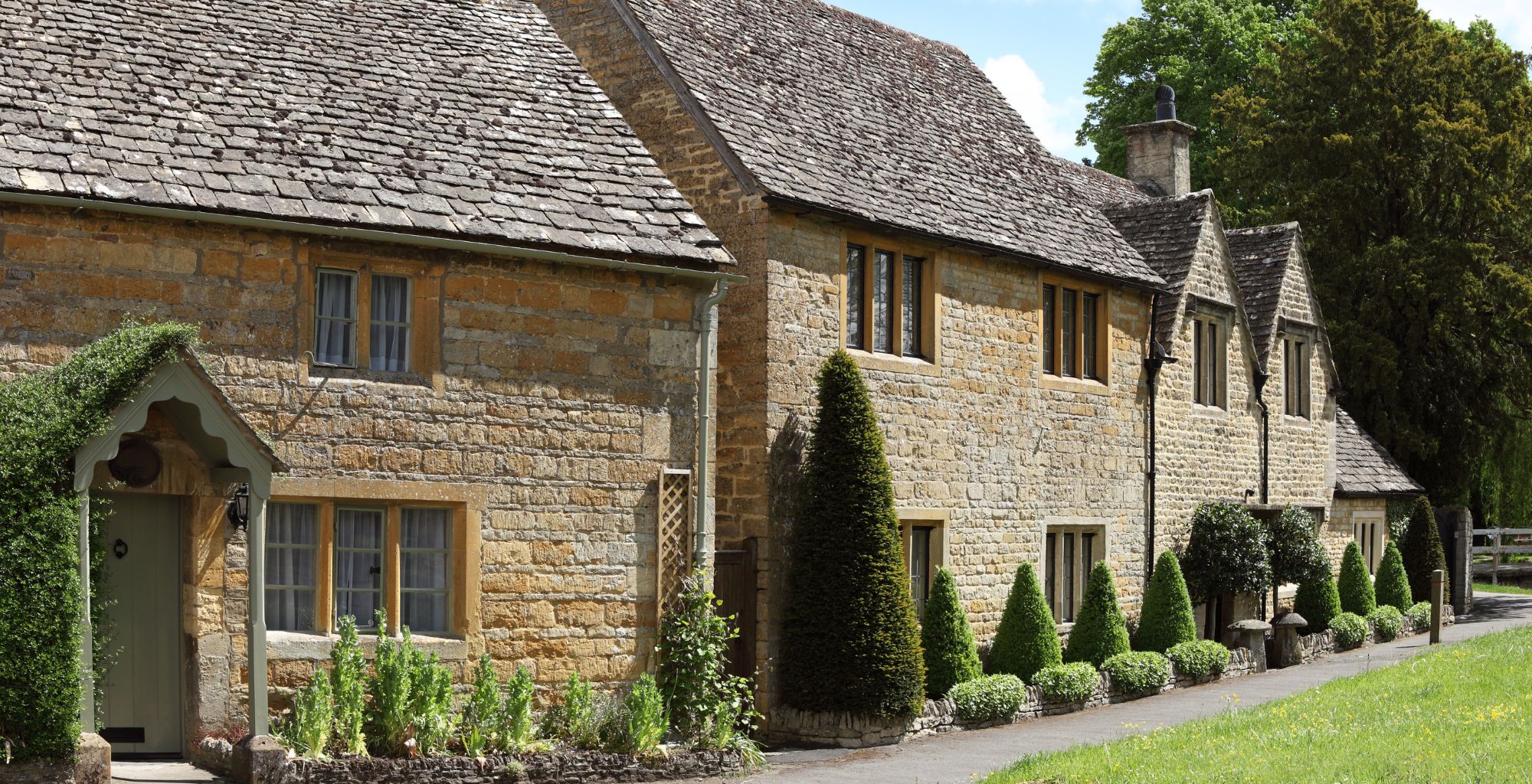
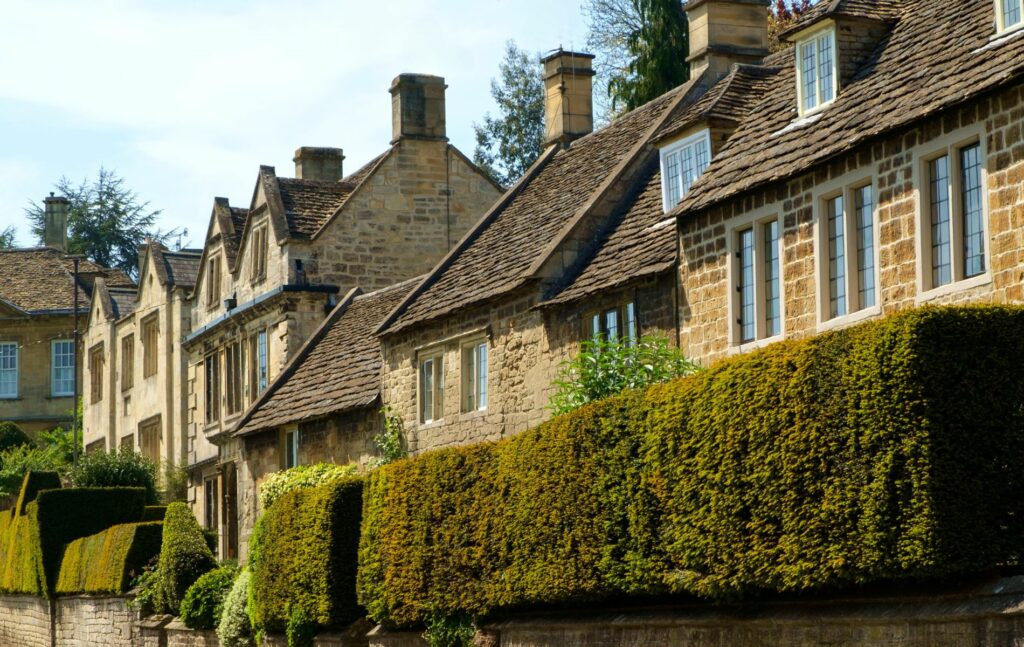
Bradford on Avon spends a good deal of its life in the shadow of Bath, five or so miles to the west, and that is the quiet opportunity. Its eighteenth-century houses were built by Flemish weaving merchants who grew wealthy on the wool trade, and they climb the steep valley sides in tiers of honey-coloured stone.
The Kennet and Avon Canal runs through the town, with towpath walks and canalside pubs, and the connections are better than the rural setting suggests.
Buyers who fix their attention on Bath alone often overlook that a few miles south sits one of the more affordable Georgian towns, with much of the same material and character at a level that tends to represent better value across property in Wiltshire.
Lymington is the outlier on this list in one respect: it faces the sea. On the southern edge of the New Forest, it looks across the Solent toward the Isle of Wight, with regular ferries making the crossing and a sailing culture that shapes the rhythm of the town.
Well-regarded schools and good road and rail links add the practical foundations that keep families here year-round rather than treating it as a summer address. The mix of forest on one side and open water on the other is what distinguishes Lymington from the inland Georgian towns elsewhere in this piece. Few places combine woodland walks and a working harbour quite so easily.
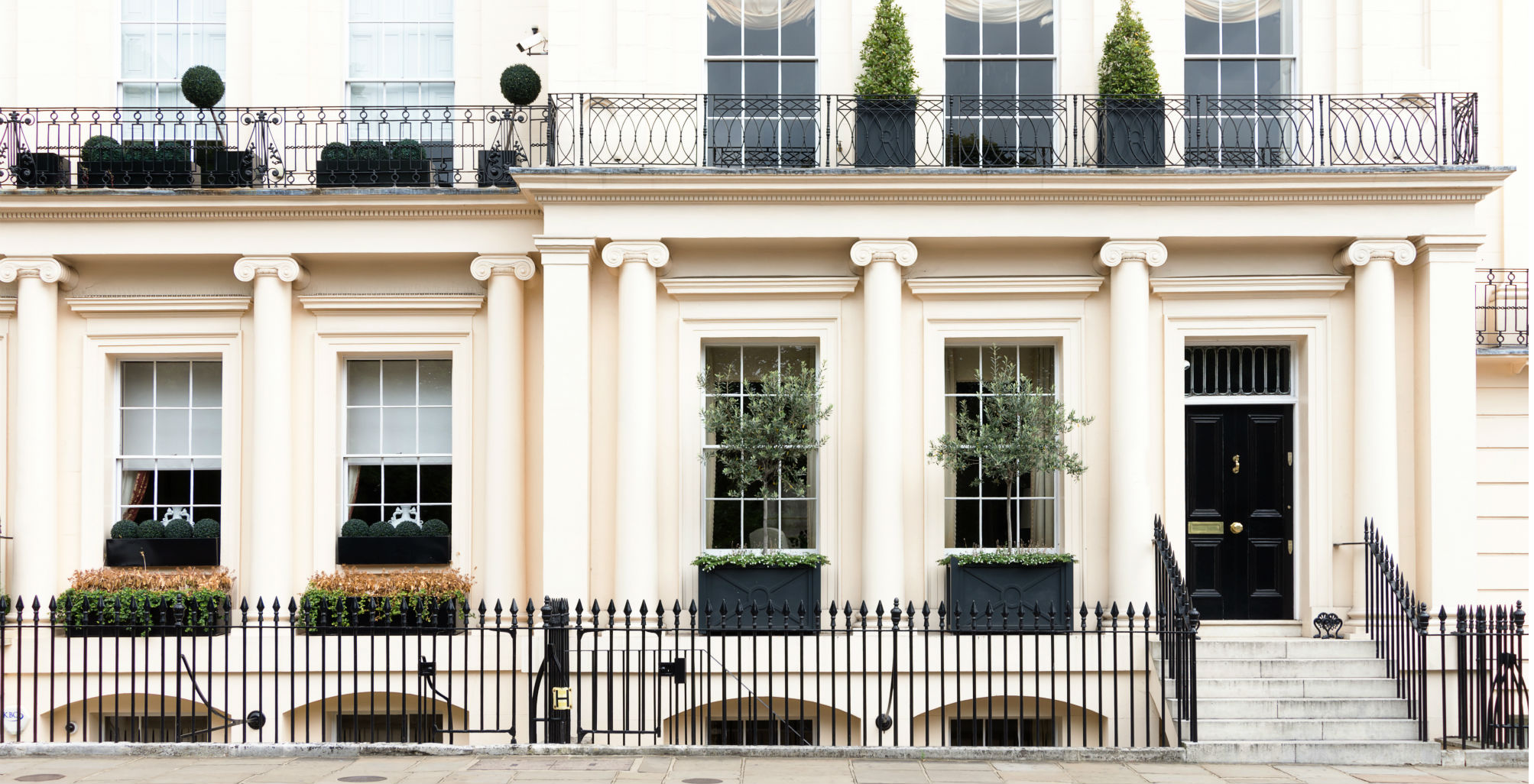
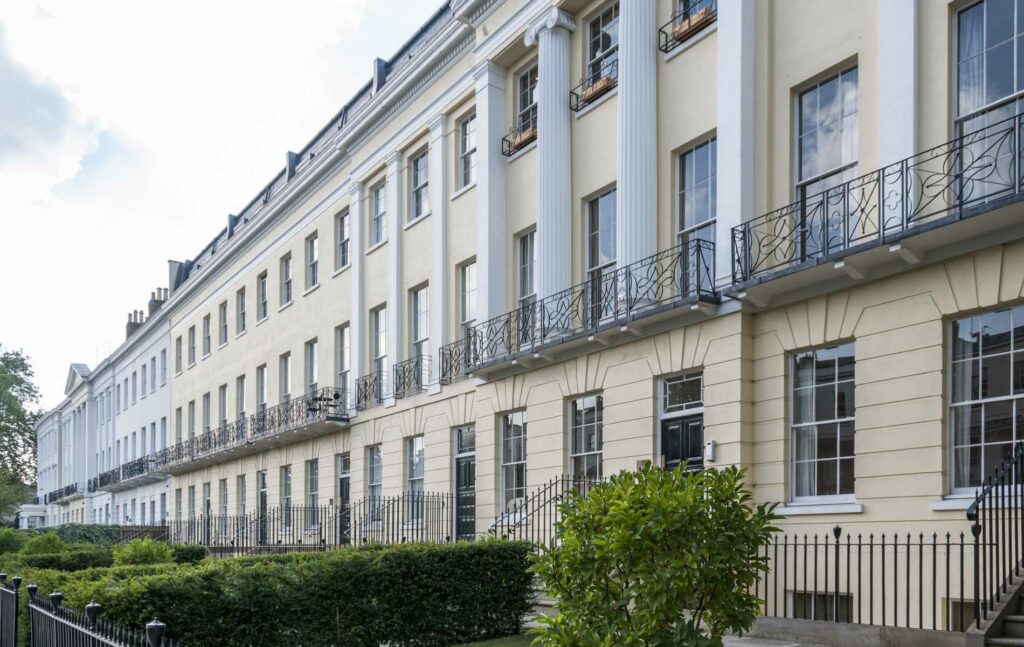
Cheltenham is where the vocabulary shifts from Georgian to Regency. Widely regarded as one of the country’s most complete Regency towns, it trades the plainer symmetry of earlier Georgian building for something more decorative: stucco villas, tree-lined promenades and ornate ironwork on balconies and railings.
The period character in Cheltenham runs beyond the houses into the shops, bars and restaurants, so the effect is felt across the town rather than confined to a few streets.
It sits on the western edge of the Cotswolds and is known for its racing and its schools. For buyers, Cheltenham is a useful place to understand that Regency is the later, showier chapter of the Georgian story, a distinction worth carrying into any viewing. Garrington’s Cheltenham buying agents know the town’s streets in detail.
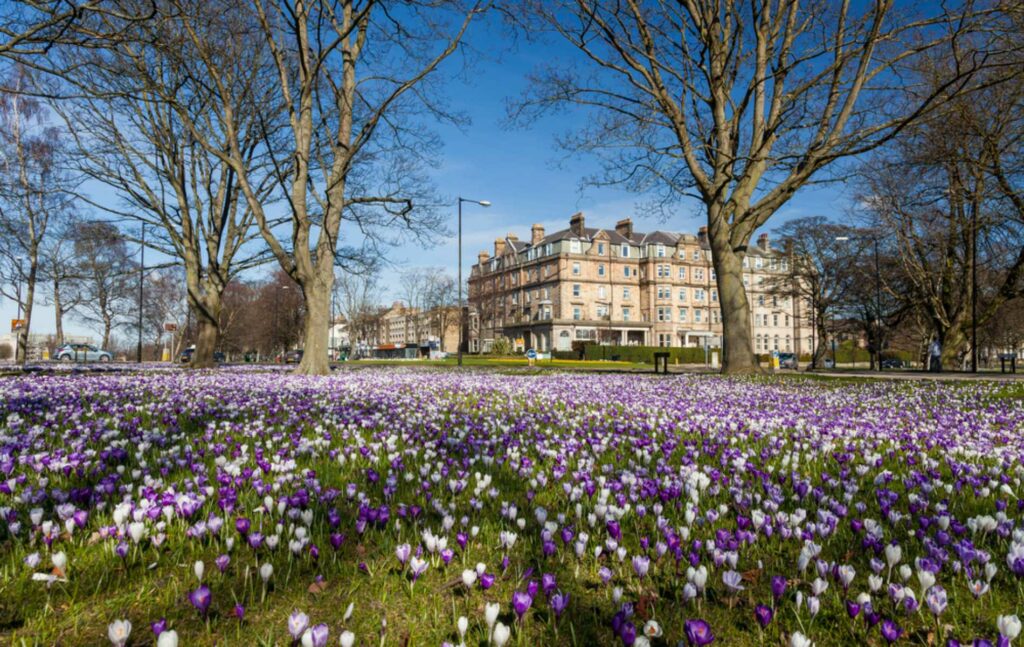
Harrogate grew rich as a spa town, and that wealth is written into its substantial townhouses and terraces, built to house and entertain visitors who came to take the waters. It is regularly cited among the happiest places to live in the UK, with a strong choice of state and private schools.
The centre is heavily pedestrianised, with an independent retail and café culture that gives it real daily life rather than only architectural interest. York and Leeds are both under forty minutes away by rail, which makes it workable for anyone who needs a city several days a week.
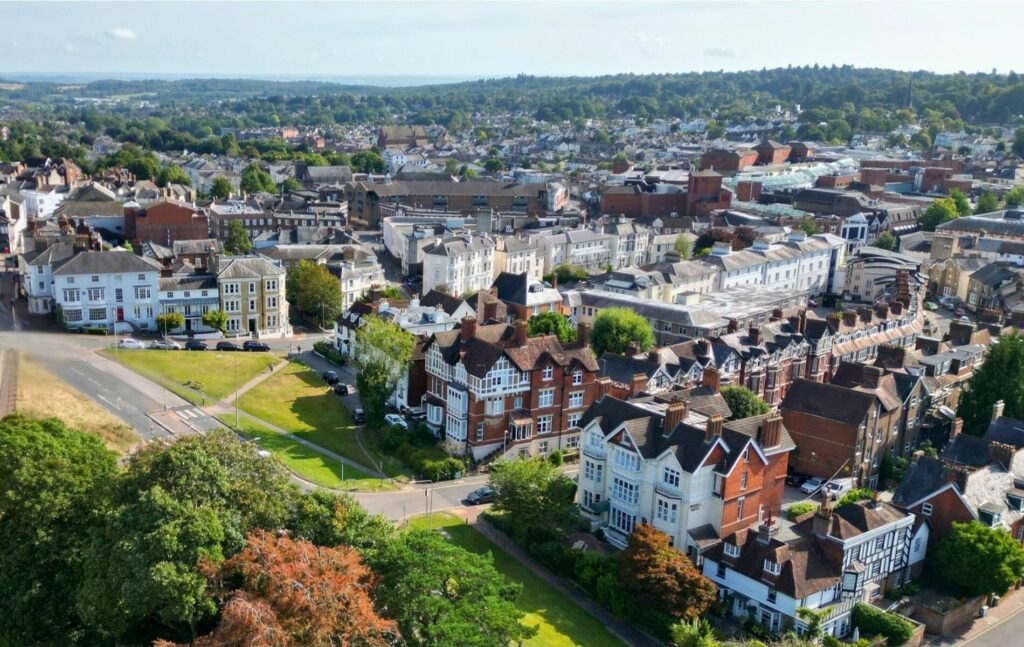
Royal Tunbridge Wells was built for leisure long before it became a commuter town. In the Georgian period it was a fashionable destination for those who could reach it, roughly a day’s stage-coach ride from London, and The Pantiles, its colonnaded parade of shops and cafés, survives as the clearest reminder of that era.
The through-line to the present is neat: fast trains now carry residents into London in a fraction of the old coaching time, which has turned a Georgian resort into one of Kent’s more established commuter towns. It has well-regarded schools and the High Weald on its doorstep.
Brighton is the second of only two coastal entries here, and the clearest case of a Georgian town built for pleasure rather than trade or agriculture. It developed into a fashionable seaside resort under the Prince Regent, later George IV, whose taste left the Royal Pavilion as its most theatrical legacy and Brunswick Square as its most disciplined.
Between those two poles sits a great deal of Regency terracing in cream and white, much of it facing the sea. It is routinely named among the leading examples of Georgian and Regency architecture in the country.
Brighton offers something the inland towns cannot: genuine city life and a seafront, in a place where the period buildings were designed from the outset to be looked at and enjoyed.
That coastal character gives way quickly to the Downs and the Weald, so a property finder in Sussex can set Brighton against the county’s quieter inland towns.
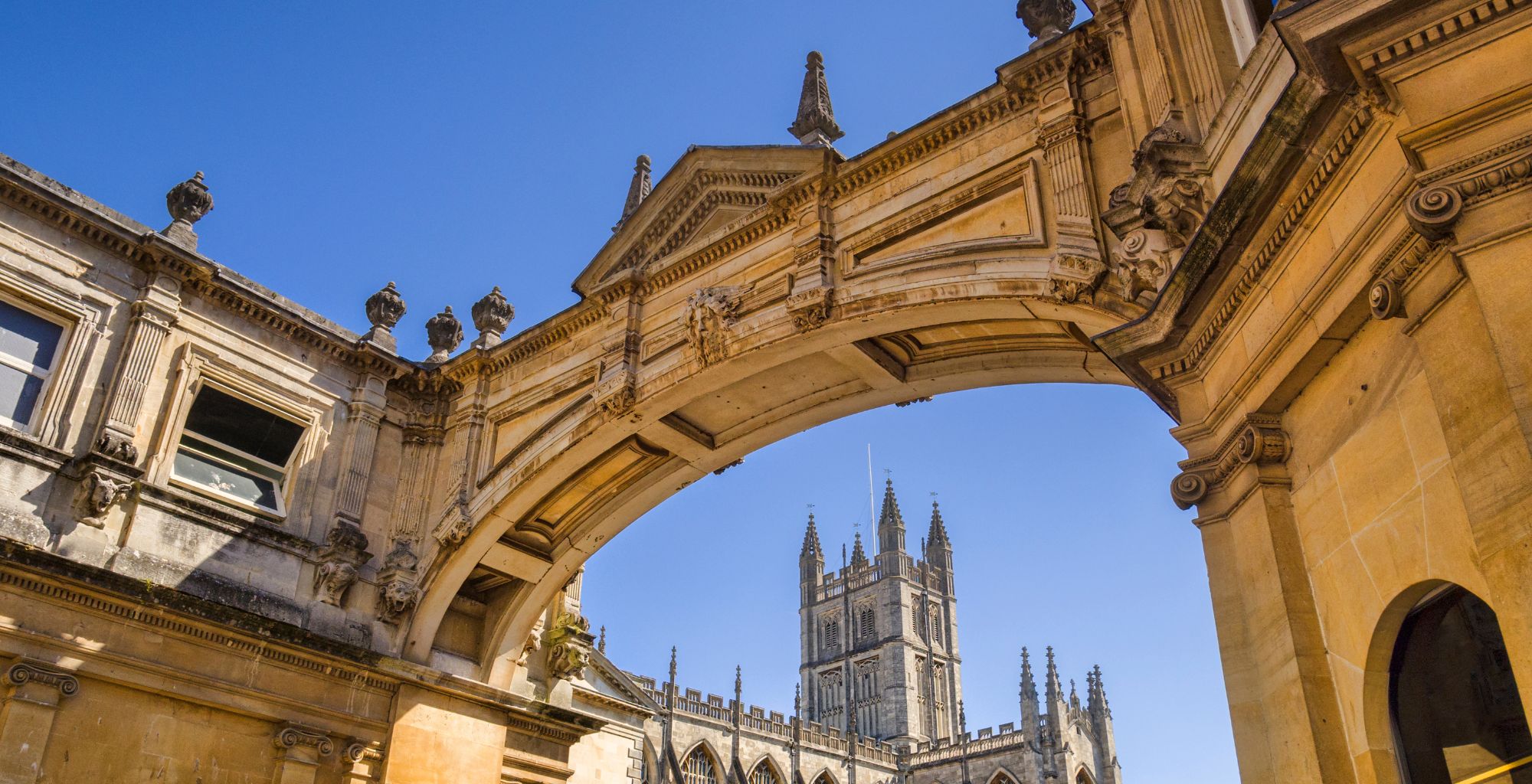
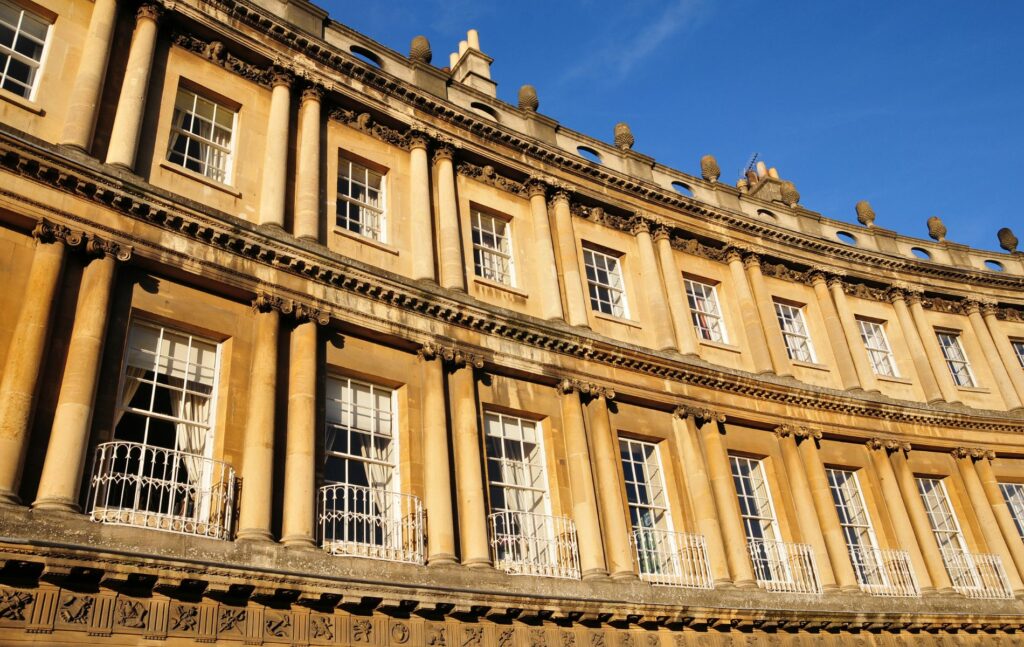
Bath is perhaps the best known of the UK’s Georgian towns, which makes the architecture the place to start. The Circus, begun by John Wood the Elder from 1754, arranged townhouses in a perfect ring, a Roman idea rendered in Bath stone.
His son, John Wood the Younger, completed the Royal Crescent between 1767 and 1774, and the convex sweep of that terrace was a deliberate break from the enclosed square that had governed urban building until then. It opened the architecture outward, toward parkland and view, rather than inward on itself.
For buyers, the reality is worth stating plainly. Addresses on the Royal Crescent or the Circus are tightly held, and when one does become available, interest can build before it is widely advertised.
The realistic route into Georgian Bath runs through its less obvious addresses: Camden Crescent, Lansdown Crescent and the streets of Bathwick all offer the same period substance without the same near-impossible scarcity. For Bath’s wider heritage, Garrington’s guide to Historic Places to Live in the UK covers the ground this piece does not.
One of the most common questions buyers ask is how to tell these periods apart, and the differences are more legible than they first seem.
The Georgian period runs from 1714 to 1837, spanning the reigns of George I to George IV. Early Georgian houses are symmetrical and comparatively plain, built around balance and proportion rather than ornament: sash windows, a central door, restrained detailing.
The later Regency phase, roughly 1811 to 1820 under the Prince Regent, is where the style loosens and shows off. Decorative ironwork, pillars, stucco and more elaborate facades all belong to this later, more confident chapter.
Victorian building, which followed, has a different silhouette. Terraces tend to be longer and narrower, with pitched roofs, smaller rooms and tighter hallways than their Georgian equivalents. The emphasis shifts from proportion to density and pattern.
Edwardian houses, from 1901 to 1910, mark a partial return to Georgian generosity: larger rooms and wider hallways come back, but usually under pitched roofs and, more often than not, with bay windows added to the front. Once those markers are learned, most period houses announce their age at a glance.
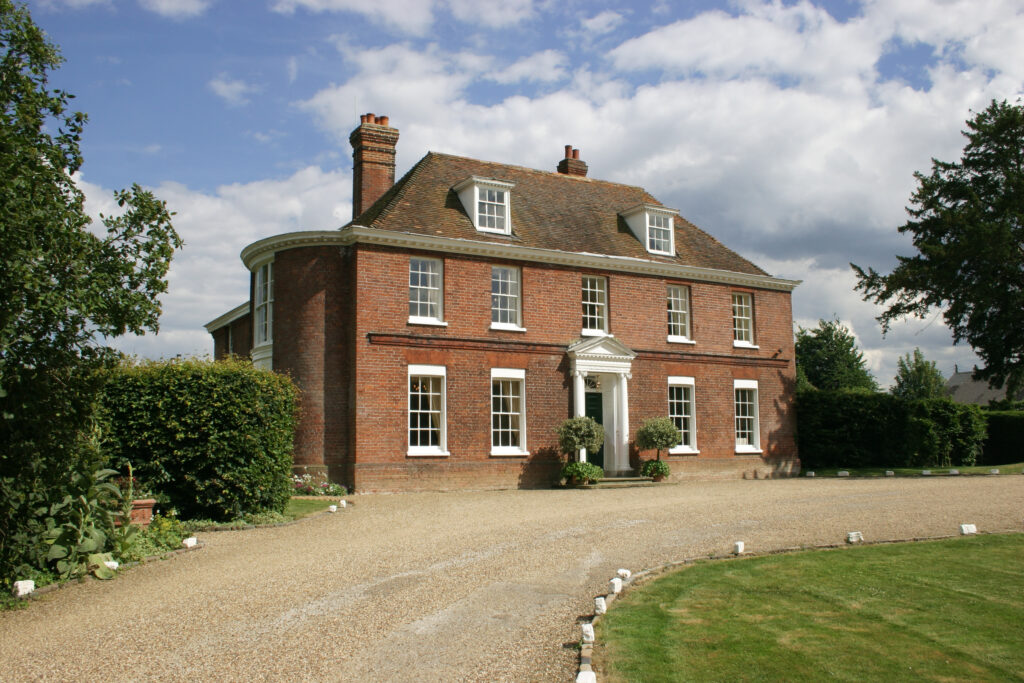
Owning a Georgian house asks a little more of you than owning a modern one, and it helps to know that before you fall for the proportions.
Sash windows are usually single-glazed, which affects both warmth and noise, and listed status often limits what can be done to change them. The walls are typically solid rather than cavity, so improving insulation means choosing between internal linings that eat into room dimensions and external treatments that alter the appearance, neither of them trivial in a protected building.
Where a property is listed, consent is needed for many alterations that would be routine elsewhere, and that governs everything from windows to internal layout.
Those rules also vary across the UK, so what is permitted in England will not always match Wales, Scotland or Northern Ireland, and local advice is worth taking before assuming any change can be made.
None of this should put a serious buyer off. The practical value of a knowledgeable buying agent is that these points are raised at the viewing, calmly and in advance, rather than emerging later as a bargaining point in a survey negotiation. Understood early, they become part of the decision rather than a surprise within it.
The thread running through every town here is scarcity. What the eighteenth and early nineteenth centuries built is all there is, and the best of it, the complete streetscapes and the addresses with the right proportion and outlook, tends to change hands quietly rather than in public.
That is where representation earns its place. A buying agent working a town properly is often aware of houses before they are marketed, understands which streets hold their appeal and why, and can read a period property’s quirks at a viewing rather than after an offer. It can be the difference between waiting for the right Georgian home to appear publicly and being alerted to it early.
If you are considering a move to one of the UK’s Georgian towns, we would welcome a conversation about the market and how we can help. Please get in touch without obligation.
The best places to live in Surrey each give a buyer something specific: a fast train into Waterloo, a...
When searching for a property with stables, the natural instinct is to begin with the house: the kitchen, the...
The common mistakes property buyers make are rarely dramatic. More often, they are small misjudgements early in a search...
There are many locations across the UK that offer a 60 minute commute to London, and the choice between...